Soldier of Fortune Magazine The Journal of Professional Adventurers


The warning arrived amid the most intense security operation Britain had faced in decades.
by A.R. Fomenko
VIENNA BUREAU – In the lead-up to the 2012 Summer Olympics, London was bracing for a global spotlight, and a threat environment to match. So when Michael Shrimpton claimed that the games would be struck by a nuclear warhead, his words carried weight.
Shrimpton, a British barrister, told a key Defence official a story he insisted was true. A nuclear device had been stolen from the wreck of the Russian submarine Kursk, and smuggled into the United Kingdom. According to Shrimpton, the bomb would be detonated during the Olympic opening ceremony. He claimed that his back-channel information came from Russian military intelligence and an associate of Pope Benedict XVI.
British government sources viewed Shrimpton as an unreliable eccentric. He previously had been censured for making unfounded claims about the missing British child, Madeleine McCann. Still, when nuclear devastation is mentioned, the response is never casual.
READ MORE from A.R. Fomenko: Berlin Blackout: Militant ‘Volcano Group’ Knocks Out Power to Homes and Hospitals
In this case, the warning arrived amid the most intense security operation Britain had faced in decades.
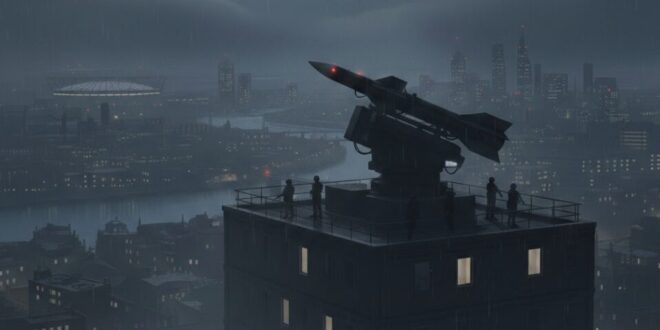
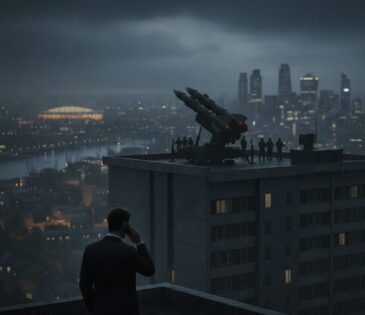
In addition to security personnel placed throughout the city, the Ministry of Defence had transformed six sites around London into ground-based air defence positions. These included Rapier surface-to-air missile systems and Starstreak missile batteries. Some were mounted on tall buildings near the Olympic Park in urban neighbourhoods, the first such deployment inside London since World War II.
A number of RAF Eurofighter Typhoon jets were forward-deployed to RAF Northolt, ready to intercept airborne threats. Helicopter assets were assigned to counter a potential 9/11-style attack on Olympic venues. Military planners stress-tested the entire network through Exercise Olympic Guardian, a nine-day rehearsal involving RAF E-3D Sentry aircraft, Royal Navy Sea King ASaC helicopters, and Puma transports carrying RAF Regiment snipers.
Into this knot of preparation came Shrimpton’s calls.
On April 19, he delivered the stark warning to Barry Burton, Principal Private Secretary to the Defence Secretary. A day later, Shrimpton told the same apocalyptic tale to British MP David Lidington.
Security officials were diverted to check, re-check, and coordinate with local and national partners. They found nothing to substantiate the claims. The only thing they uncovered was grounds to charge Shrimpton.
Police arrested him at his home in Wendover on charges of communicating false information with intent.
He doubled down. Shrimpton described the arrest as a “colossal cock-up.” He demanded “compensation and a nice lunch with MI5.” He later claimed hostile infiltrators inside the Thames Valley Police had orchestrated his detention in order to buy time for the bomb to be moved. He wrote letters to Buckingham Palace, the Ministry of Defence, the Kremlin, and the U.S. National Security Agency saying that the target had shifted to New York City.
The saga darkened when, during the investigation, police found a memory stick in Shrimpton’s home containing indecent images of children. He claimed that the stick was planted in order to discredit him. The court didn’t buy it.
In November 2014, Shrimpton was convicted on counts of communicating false information, and was sentenced to 12 months in prison.
Some said it wasn’t enough.
“It forced us to siphon off our efforts to investigate legitimate threats,” one former British defence official told Soldier of Fortune.
Britain returned to watchful calm. The missiles returned to base. The jets stood down.
Shrimpton’s career did not recover. In 2018, the Bar Standards Board revoked his right to practice law in the United Kingdom.
A.R. Fomenko is based out of Soldier of Fortune’s Vienna Bureau.