Soldier of Fortune Magazine The Journal of Professional Adventurers


War creates borders. Borders shape power. We examine what moves along the seams.
by Susan Katz Keating
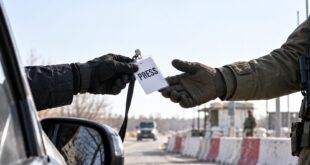
The soldier lifted his rifle until the business end was inches from my face.
“What brings you to Northern Ireland?” he asked.
I took a step back, and he lowered the weapon. I now was in the Republic of Ireland, beyond his authority. His question covered a wide field of possibilities. I could have been anyone – a journalist, a woman taking a scenic walk, a smuggler, or an IRA operative conducting paramilitary activity.
It was there that I first understood the border not as a line on a map, but as a condition – one that determines who holds power and who survives contact with it. I felt the same dynamic in the Caribbean, where I stood at the painted line between Castro’s Cuba and the U.S. Navy base at Guantanamo Bay. I felt it while reporting on mass violence, when I understood that a state boundary could determine whether a person is a law-abiding citizen or a criminal.
Other Soldier of Fortune correspondents have worked along similar fault lines. They have reported from the Mexican frontier, where cartel operatives and federal agents move along a boundary defined by a fence – or by nothing. They have roamed the edges of Belarus, Serbia, and other regions where jurisdiction shifts even when the landscape does not.
READ MORE: So You Want to Be a War Correspondent
But while borders define the obvious matters of who holds authority and who enforces law, they also create seams between systems. The seams sometimes overlap, or have gaps.
This is especially acute in active conflict areas. In such places, the difference between danger and protection may hinge on relationships, paperwork, or access.
Independent initiatives now move equipment and vehicles across borders at a scale rarely seen in previous conflicts. Volunteer networks, nonprofit entities, and formal state programs often operate in parallel.
Many of these efforts are driven by conviction and a desire to deliver support. At the same time, when material crosses multiple jurisdictions, it passes through different national requirements and administrative systems. Documentation and responsibility may move through several stages before reaching a final destination.
The existence of parallel channels does not imply misconduct. It reflects the scale and tempo of modern conflict. But as these pathways expand, they create a complex logistical landscape. It does not always follow the simplicity of a marked boundary.
READ MORE: I Went Looking for Smugglers on the Border
War creates borders. Borders shape war. And in the spaces where authority shifts, there is a gray zone.
In my own experiences along the border in Northern Ireland, my encounters with British soldiers depended on what else was going on at the time, and on the individual unit. One patrol waved me through. Another stopped and searched me a mile down the road, along a switchback boundary where jurisdiction changed repeatedly within a short distance.
They were not being arbitrary. They were calculating risk. They knew what could move through those lanes and hedgerows: weapons, explosives, couriers, intelligence. A single mistake could cost lives.
The soldiers eventually left. The roadblocks disappeared. The rifles lowered.
The corridors did not.
High-risk borders still cut across the world. Some are marked by fences and checkpoints; others are invisible until someone stops you and demands an explanation. Movement continues. It includes fighters, equipment, money, tactics, and ideology. Some of it is lawful. Some of it is humanitarian. Some of it is neither.
What moves along those seams shapes conflicts far beyond the point of crossing.
That is why Soldier of Fortune is launching a project to examine it.
Crossings in Wartime is an ongoing investigative series examining the borders that shape modern conflict, as well as the people, equipment, and ideas that move across them. This project will follow civilian pipelines, foreign fighters, covert logistics networks, and the flow of wartime experience into other societies and conflicts.
Each border reveals something different. Each crossing ripples beyond the moment itself.
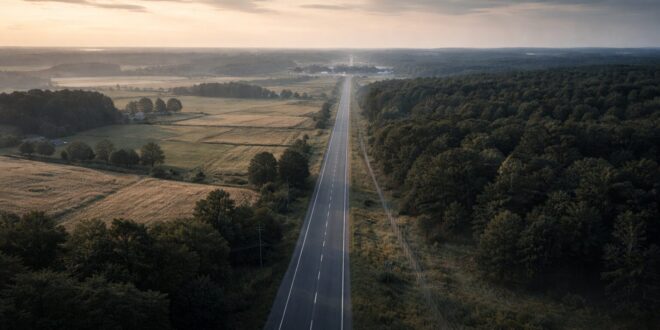
We begin in Ukraine. The first installment is coming soon.