Soldier of Fortune Magazine The Journal of Professional Adventurers


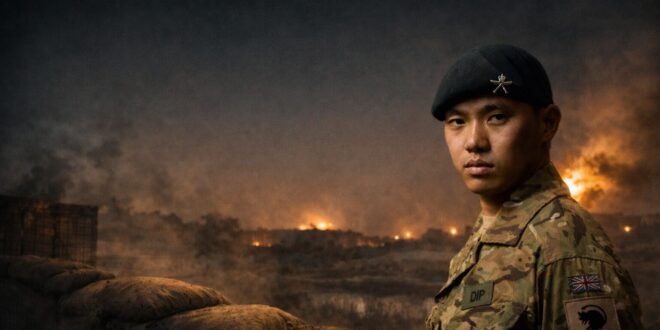
The Royal Gurkha Rifles soldier defended a Helmand checkpoint alone. By dawn the attackers were gone, and the sentry who held the line was standing at his post.
by Jose Campos
At first light outside the British patrol base near Babaji, the ground told the story of the night before. Spent brass littered the checkpoint floor, witnesses said. Grenade pins lay scattered in the dust around the fighting position. The Hesco barriers were pocked with bullet strikes and scarred by rocket blasts. Beyond the wire, in the irrigation ditches that cut through the Helmand farmland, dark smears marked where wounded insurgents had been dragged away before dawn.
Inside the battered checkpoint stood the soldier who had stopped them.
Acting Sergeant Dipprasad Pun, a Gurkha with the 1st Battalion, Royal Gurkha Rifles, had been on sentry duty on the night of 17 September 2010. The patrol base near the town of Babaji in Helmand Province had been quiet in the darkness when he first heard the sound.
It was faint at first.
“I thought at first maybe it was a cow,” Pun later recalled. “But my suspicions soon built up, and I saw Taliban digging to lay down an IED in front of our gate.”
Pun immediately began preparing for the fight he knew was coming. He grabbed two radios so he could remain in contact with his commander as the situation unfolded. He brought his personal weapon, a SA80 rifle, and positioned himself with a machine gun mounted at the checkpoint.
Three other British soldiers were inside the compound area of the patrol base, but the checkpoint itself was defended by Pun alone.
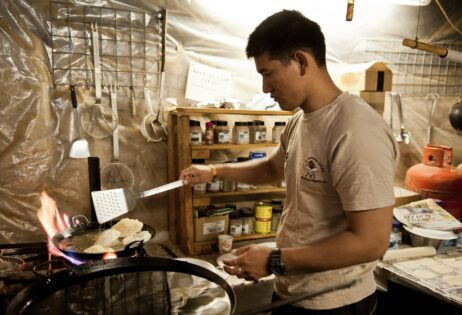
A Gurkha soldier in Afghanistan, 2011. Photo by Petty Officer 2nd Class Jonathan David Chandler.
Realizing the insurgents were about to attack, he radioed his commander and launched the first grenade toward the men digging near the gate.
The quiet night disappeared in a burst of gunfire.
Taliban fighters opened up from irrigation ditches and nearby compounds surrounding the patrol base. Rocket-propelled grenades slammed into the defensive position as the insurgents attempted to overwhelm the checkpoint from several directions at once.
Pun moved constantly along the fighting position, engaging targets as they appeared in the darkness. Later he estimated that somewhere between 15 and 30 insurgents were involved in the attack.
“I thought there might have been around 20 to 30, but later locals told me it was probably about 15,” Pun later said. “The firing went on continually for about 17 minutes.”
From behind the sandbags he fired controlled bursts from the machine gun, sending streams of tracer rounds into the darkness. During the fight he fired about 250 rounds from the machine gun and emptied six magazines from his SA80 rifle, while repeatedly throwing grenades toward the attackers.
He ultimately hurled 17 hand grenades and detonated a Claymore mine as insurgents attempted to close on the checkpoint.
At one point fighters tried to storm the position from multiple directions. Pun moved along the defensive line to engage them, refusing to stay fixed in one place even as rounds struck the sandbags and RPG explosions rocked the position.
“At first I was a bit scared, and I thought definitely they are going to kill me,” he said later. “But as soon as I started firing, that feeling went away.”
As the firefight intensified, one insurgent managed to climb onto the checkpoint position itself. Pun’s weapon had run dry at that moment. Without hesitation he grabbed the heavy machine-gun tripod and hurled it at the attacker, knocking him back off the position while shouting in Nepali:
“Marchi Talai!” — “I will kill you.”
Pun later recalled dropping a sandbag on another attacker who was trying to climb up toward the fighting position, sending the man tumbling back down the wall.
The fight continued in the darkness as Pun moved along the position, firing and throwing grenades to break up each new push toward the compound. In the course of the attack he believed he had killed at least three insurgents and forced the rest to withdraw before they could breach the checkpoint.
By the time other soldiers from the patrol base reached the fighting position, the assault was already collapsing. Taliban fighters dragged their wounded into the irrigation ditches and disappeared back into the darkness.
The entire engagement had lasted about fifteen minutes.
Pun remained at the checkpoint surrounded by spent cartridges, empty magazines, and grenade pins. The position had held, and the three soldiers inside the compound had survived the attack.
Pun was part of a long military tradition. Gurkhas are soldiers recruited from the hill communities of Nepal who serve in the British Army, a relationship dating back to the Anglo-Nepalese War of 1814–1816, when British forces first encountered Nepali fighters and were impressed by their toughness and discipline. Since then Gurkha soldiers have served in conflicts across the world, from the trenches of the First World War and the jungles of Burma in the Second World War to modern campaigns in Iraq and Afghanistan.
Their expertise is highly valued. They teach survival and other techniques to partner militaries.
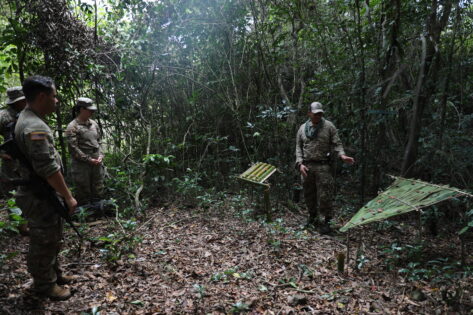
At Babaji, that reputation was reinforced once again.
For his actions during the defense of the patrol base, Acting Sergeant Dipprasad Pun was awarded the Conspicuous Gallantry Cross, the United Kingdom’s second-highest award for bravery in combat.
When the fight was over, Pun was exhausted.
“At the end I was near collapse,” he said. “I am very lucky, but I am a survivor. My family are very happy. My father was an Indian Army Gurkha, so he understands.”
The insurgents who came to the checkpoint that night expected to overwhelm a small British outpost under cover of darkness. Instead they ran into a lone Gurkha who refused to give ground.
By dawn the attackers were gone, and the sentry who held the line was standing at his post.
Jose Campos writes frequently for Soldier of Fortune.