Soldier of Fortune Magazine The Journal of Professional Adventurers



by Susan Katz Keating
Police union issued a unanimous vote of no confidence in Chatman, who leads the Brown University segment of investigating a Dec. 13 mass shooting on campus.
Brown University’s campus police department operates inside a culture of secrecy, retaliation, and institutional cover-up, their own sergeants charged. The department fosters a toxic workplace culture that creates an atmosphere of fear, the sergeants union claimed, with critical incidents allegedly being slow-walked or buried.
The allegations included a formal, unanimous vote of no confidence in Police Chief Rodney Chatman, who leads the Brown University segment of investigating a Dec. 13 mass shooting on campus. Two students were killed, and nine others wounded in the attack. The suspect remains at large, while authorities – including Chatman – have come under fire for missteps surrounding campus security and the investigation. The FBI has released a number of images a poster related to the shootings.
The allegations against Chatman were lodged by the International Brotherhood of Police Officers Local 863, which represents 10 Brown University police sergeants. In August, the union issued a formal vote of no confidence in Chatman and Deputy Chief John Vinson, citing a lack of transparency, a toxic workplace culture, and an atmosphere of fear inside the department.
According to the union, sergeants are reluctant to speak publicly because they fear job-related retaliation. That concern is reinforced by several federal Unfair Labor Practice charges filed against the department, alleging wrongful terminations and coerced resignations. The message from the top, union members say, is clear: keep quiet or pay the price.
Underlying many of these complaints is what union leaders describe as a “cover-up culture.” Internal reports from 2021 and 2023 allege that Brown police were slow to notify Providence police about significant threats, raising concerns that leadership prioritized institutional reputation over public safety.
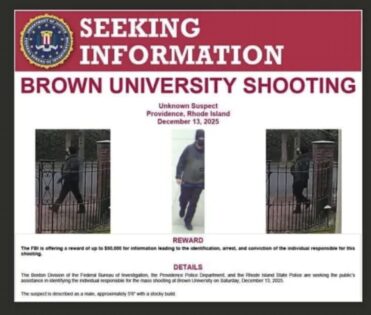
FBI poster.
Among the specific complaints is that officers were ordered to meet a traffic-ticket quota, in violation of Rhode Island law. The issue was first reported by the Providence Journal. The quota system is “a very dangerous method of policing,” according to Steve Brown, executive director of the ACLU of Rhode Island.
Brown University launched an internal investigation into the department’s workplace culture last April, but the probe itself quickly drew criticism. Deputy Chief Vinson was initially involved in the investigation despite past leadership controversies during his tenure at the University of Washington, where he was described as coercive and prone to micromanagement.
The university has since hired CriticalArc, a security software company, to lead the investigation. Reporting by the Brown Daily Herald has raised questions about potential conflicts of interest stemming from professional connections between Chief Chatman and the firm.
The union asked the Rhode Island State Police to conduct an independent investigation, arguing that Brown cannot credibly police itself.
Separately, the ACLU of Rhode Island filed a lawsuit on behalf of two journalists seeking access to Brown campus police records under the Access to Public Records Act. Brown police have refused to release arrest reports.
Soldier of Fortune contacted Chatman’s office for comment. He did not immediately respond.
Chatman told reporters this week that no security was posted at the Barus & Holley building, where the gunman opened fire on Saturday, saying this was “typical for that academic space.”
The gunman remains on the loose, and “could be anywhere,” officials have said.
Susan Katz Keating is the publisher and editor in chief at Soldier of Fortune.