Soldier of Fortune Magazine The Journal of Professional Adventurers


by A.R. Fomenko
Hidden beneath the border, sophisticated tunnel networks have turned Ceuta into one of Europe’s most enduring corridors for organized cross-border smuggling.
VIENNA BUREAU – It was the kind of pursuit that runs slow and cold. Spanish authorities hunted in vain for years to uncover a smuggling tunnel between Morocco and a tiny exclave of Spain within the North African country. The underground passageway was so elusive, they called it “the ghost.” In February 2025, they found it, thanks to a fortuitous drug bust.
My source in Madrid sent a message: “The ghost has been illuminated.”
The tunnel connects Morocco to Ceuta, a Spanish autonomous city that sits along the North African coast, facing the European continent. It’s a day’s drive from Casablanca. To hear my source tell it, the old mysterious vibe persists in Ceuta; only, it’s gone underground. Literally.
My source, “Daniel,” knew about the tunnel because he has connections to Spain’s Anti-Corruption Prosecutor’s Office, which took part in the hunt. Fittingly, the hunt was part of a larger effort known as Operation Hades.
READ MORE from A.R. Fomenko: Notorious Fugitive ‘The Fly’ is Captured When Luck Runs Dry in Romania
Daniel agreed to tell me about the tunnel. The first time we talked, we met at a small bar in Madrid.
“We knew the tunnel was there,” he said. “But it was a phantom.” Tips went nowhere, and anyone who seemed to have real information simply vanished. “They went underground, so to speak.”
In December 2023, investigators got their break.
Civil Guard agents intercepted a haul; three tons of hashish packed tightly inside a truck at the port of Ceuta. It was headed for Algeciras in Spain, the site of other major drug busts.
“That break was what we needed. It gave us a trail,” Daniel said. The trail led to an abandoned marble factory in the Tarajal Industrial Park, near the Moroccan border.
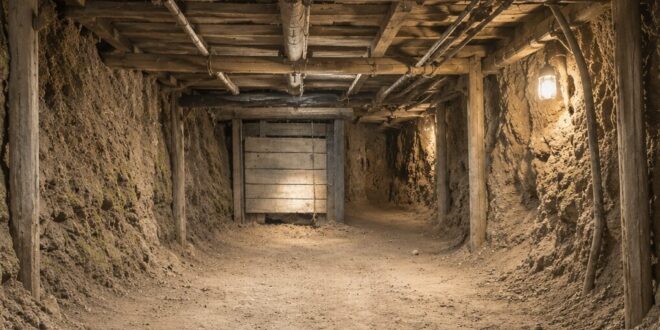
It was the kind of place you drive past without a second glance. But underneath, it hid a secret. Concealed beneath a trapdoor, there was a stairway leading 39 feet underground and into a tunnel. It is narrow and reinforced with timbers lining the walls to keep them from collapsing. Basic lights show the way through the dark passageway, which has many offshoots on the Spanish side.
Did people move quickly through the tunnel, or did they remain underground for any length of time?
“We didn’t find a kitchen,” Daniel said. “Not yet, anyway.”
Did you find any drugs, I asked.
“No. We only could go as far as Spanish territory allows.”
Spanish authorities blocked off the tunnel entrance. They began to map the full extent of the passageway. They wanted to find how far it stretches into Moroccan territory; where it ends; and what – or who – might have moved through the corridor.
Nearly a year after I first met with Daniel, he sent a message that he had an update. We convened at another bar in Madrid. It had to be different from the previous meeting site, he said. The reason? “You never know.”
Spanish authorities found something new in Ceuta, he told me. They uncovered a sophisticated tunnel system, tucked beneath an industrial warehouse.
I thought it sounded like the original tunnel. But no, Daniel said, this one was bigger. It had its own rail system, and steel fortifications. It held underground equipment that was used to lift big pallets of hashish. The drugs were being sent from Morocco into Spain. I still was skeptical. Maybe this was just an upgrade on the earlier tunnel they found during Operation Hades?
Daniel insisted it was a newly discovered tunnel; part of a set.
“They found plans for a third tunnel,” he said. “I don’t know if that one was built.” There might be others.
Spanish investigators now believe the underground network is larger than originally understood. The discovery of additional tunnel systems suggests the first passage uncovered during Operation Hades was not an isolated engineering project but part of a broader trafficking infrastructure that continues to evolve.
A slow-burn investigation, quiet and methodical, brought the first one to light. But as any investigator knows, when one tunnel closes, another one’s already being dug.
Postscript: The Story Continues
First published in April 2025, this investigation has been updated and republished following new developments in Ceuta’s continuing tunnel investigation.
A.R. Fomenko is based out of Soldier of Fortune’s Vienna Bureau.