Soldier of Fortune Magazine The Journal of Professional Adventurers


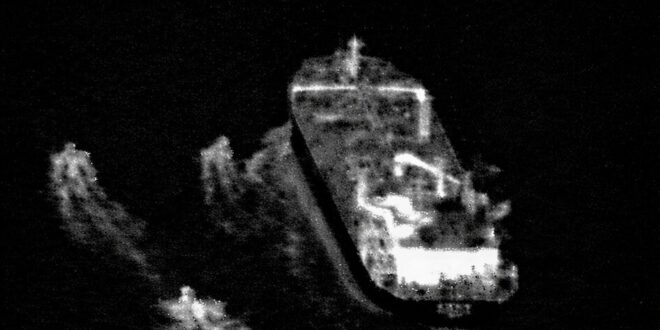
As Iran threatens to burn ships that enter the narrow waterway, some crews are gambling that a few words might protect them.
ANALYSIS by Susan Katz Keating
The Strait of Hormuz lay ahead when the cargo ship Sino Ocean changed its transponder. A new message appeared on maritime tracking screens:
“CHINA OWNER — ALL CREW.”
The signal was meant for whoever might be deciding which ships to attack. The translation was simple: Don’t shoot.
In a region where missiles, drones, and fast attack boats hunt commercial shipping, a few words typed into a ship’s transponder can become a survival tactic. One that is driven by desperation.
Iran has warned ships away from the waterway. An official from the Islamic Revolutionary Guard Corps declared March 2 that the Strait of Hormuz was closed, and vowed that any vessel entering the passage would be set on fire. The warning followed several reports of Iranian attacks on ships approaching the corridor.
For years Iran’s Islamic Revolutionary Guard Corps Navy has patrolled the waters around Hormuz using swarms of small, fast attack boats that operate close to commercial traffic. The IRGC crews routinely approach tankers at high speed, sometimes crossing bows or circling within a few dozen yards while filming the encounter. The IRGC has held exercises to train for operations in the region.
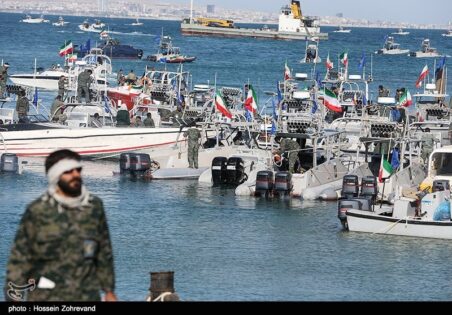
Military speedboats at IRGC exercises in the Strait of Hormuz, 2015. Photo from the Tasnim News Agency, licensed through Creative Commons.
In past confrontations the crews have fired warning shots, seized vessels, or ordered ships to divert toward Iranian waters. In those moments, the identity of a ship, and what others believe about that identity, can matter a great deal.
The waterway funnels global commerce through a narrow corridor between Iran and Oman. At its tightest point, only a pair of shipping lanes carries roughly a fifth of the world’s petroleum supply. Tankers usually pass through the waterway in a constant procession. Outbound vessels carry crude toward Asia and Europe while inbound ships arrive to load cargo at Gulf ports. When shooting starts in the region, Hormuz becomes the most dangerous stretch of water in global trade.
In the past week traffic through the chokepoint has slowed sharply. Dozens of bulk carriers, oil tankers, and gas carriers have stopped in safer waters rather than risk being attacked or set on fire.
Some captains have waved the transponder equivalent of a white flag by broadcasting messages saying their ships are Chinese-owned.
Earlier in the week the bulk carrier Iron Maiden altered its AIS destination field to read “CHINA OWNER” while slipping through the chokepoint along the Omani coast. Another tanker signaled that it was “Muslim-owned and Turkish,” apparently hoping attackers might leave it alone.
That small act of signaling reveals something about the moment. The sailors steering those ships are navigating more than a narrow waterway. They are navigating a shifting balance of power in one of the most volatile regions on earth. Their goal remains unchanged: cross the passage, reach open water, and keep the cargo moving before the next missile or drone appears on the horizon.
Does it work? The Sino Ocean cleared the strait on Saturday, ship-tracking data later showed.
Susan Katz Keating is the publisher and editor in chief at Soldier of Fortune.