Soldier of Fortune Magazine The Journal of Professional Adventurers


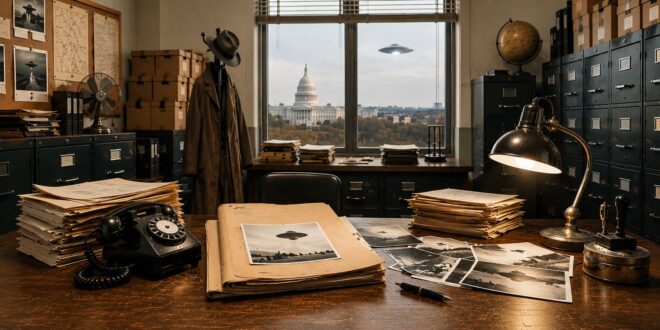
The Bureau spent years chasing flying saucers. Then it stopped. One memo explains why the public never trusted that decision.
by Jose Campos
The Roswell story was high on the public radar when the FBI’s Dallas Field Office fired off an urgent cable to Director J. Edgar Hoover. An object had been recovered in July 1947 near Roswell, New Mexico. It was hexagonal, and suspended by cable from a balloon. Wright Field had been notified. A special plane was transporting the disc for examination. Three years later, another UFO memo was written by the head of the FBI’s Washington Field Office. Together, they remain two of the most intriguing documents in federal records; not because of what they confirm, but because of what they don’t.
The Bureau’s involvement with UFO’s didn’t begin with a formal investigation. It began with a flood.
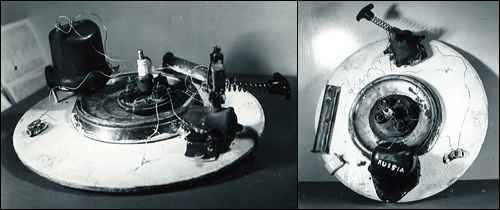
Throughout 1947, sighting reports poured in from across the country. A circular saw blade had allegedly struck a church lightning rod in one account. A wooden platter rigged with a spark plug and brass tubing was sent in by an Illinois woman who found it in her front yard. Hoover ordered his agents to investigate anyway, partly because the Air Force asked for help compiling reports, and partly because the Bureau had broad enough federal authority to justify keeping its eyes open. In the early Cold War, unexplained objects in American skies weren’t just a curiosity; they were a potential counterintelligence problem.
That mandate didn’t last long. By mid-1950, Hoover pulled the Bureau out of the UFO business. The Air Force had jurisdiction; the FBI had other priorities.
But before the curtain came down, one more memo hit Hoover’s desk.
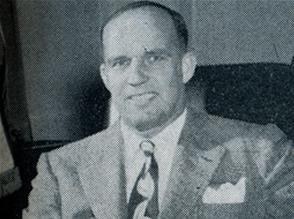
On March 22, 1950, the FBI’s Washington Field Office, Guy Hottel, sent a single page memo upstairs. An informant claiming to be an Air Force investigator had walked in with a story about three flying saucers recovered in New Mexico. The memo described them as circular and roughly 50 feet across. Each was occupied by three bodies of human shape but only three feet tall. They were dressed in metallic cloth of a very fine texture, bandaged in a manner similar to the blackout suits used by speed fliers and test pilots. The crashes were attributed to U.S. government radar interfering with the saucers’ controlling mechanisms.
Hottel passed it up the chain. The memo ends with a blunt notation: No further evaluation was attempted.
Hoover never followed up. The FBI closed no loop, opened no file, and interviewed no witness. The memo went into the archives and sat there for decades — until 2011, when the Bureau launched a digital records vault and someone found it.
Within days, media outlets reported on the memo. Many took it at face value.
The Hottel memo is a third-hand account. It describes an informant relaying what an alleged Air Force investigator had claimed. The Bureau never treated it as anything more. It was written nearly three years after Roswell, with no documented connection to those events. Some researchers claim it as evidence of a government coverup; others say it was recycling a hoax already circulating at the time.
The FBI spent three years quietly helping the Air Force investigate UFO sightings, then walked away from the subject four months after the Hottel memo landed on Hoover’s desk. The timing suggests the Director didn’t find the flying saucer story worth pursuing.
The Hottel memo remains the most-viewed document in FBI history.
The mystery remains unsolved.
Jose Campos writes frequently for Soldier of Fortune.