Soldier of Fortune Magazine The Journal of Professional Adventurers


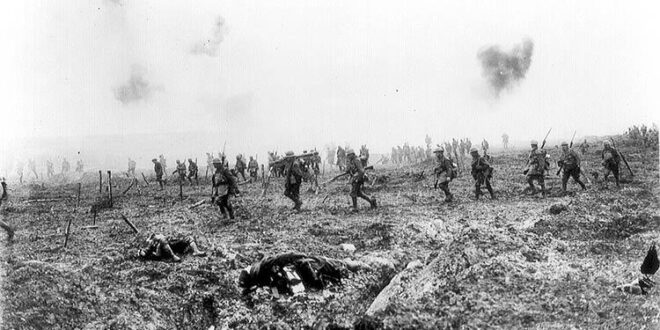
He tracked his quarry on the Canadian frontier before taking his skills to the trenches of France. With 115 credited kills, Henry Norwest became one of Canada’s deadliest snipers of World War I.
by Bobby Dee
The two German snipers knew they were being hunted. Somewhere across the shattered ground of France, a Canadian marksman had fired on their position, and now they were looking for him. But Henry Norwest was in no hurry. The cowboy from Alberta had spent years hunting and trapping in the wilderness, and he knew how to wait for his quarry.
For two days, Norwest remained concealed while the Germans searched for him. He watched their position, waiting for the moment when they would grow careless and expose themselves. When that moment came, he shot both men within 15 minutes. The Germans had been hunting a sniper, but the sniper had been hunting them.
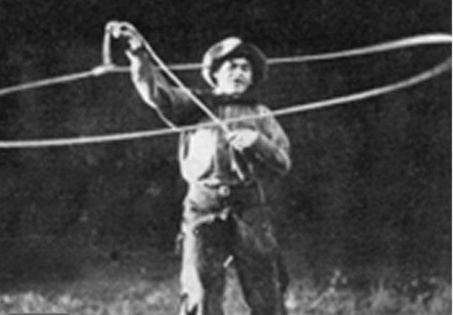
It was the sort of contest Norwest understood. Back home in Alberta, he had worked as a cowboy, trapper, and rodeo performer, learning to handle horses, read the land, and endure long stretches outdoors. On the Western Front, those skills had turned him into one of Canada’s most accomplished military marksmen.
By the time an enemy sniper finally caught him, Norwest had been credited with 115 fatal shots. His targets included German snipers, machine-gun crews, and other enemy soldiers who threatened Canadian positions. The cowboy had become a specialist in hunting the hunters, and his reputation had spread well beyond his own battalion.
From the Saddle to the Trenches
Henry Norwest was born near Fort Saskatchewan, Alberta, into a family of Cree and French ancestry. A Métis who grew up in Canada’s western country, he broke horses, worked cattle, repaired saddles, and performed in rodeos. He also trapped animals, developing the ability to recognize tracks and signs that other men might overlook.
The cowboy was not always a model of discipline. When he first enlisted in the Canadian Army in 1915, under the name Henry Louie, his military career ended abruptly with a discharge for drunkenness. After a brief spell with the Royal North-West Mounted Police, he enlisted again, this time under the name by which he would become famous. He eventually joined the 50th Battalion of the Canadian Expeditionary Force and crossed the Atlantic to fight in France.
There, amid the mud, shell craters, and tangled barbed wire, Norwest discovered that the skills of a western hunter had a deadly application. He was an accomplished rifleman, but marksmanship alone was not enough to survive the dangerous work ahead. The battlefield demanded patience, concealment, and an understanding of how another hunter might think.
A Hunter in No Man’s Land
Sniping on the Western Front was a dangerous business. A soldier who raised his head above a trench parapet might never get the chance to duck again. German marksmen watched for movement from ruined buildings, carefully disguised positions, and the broken ground between opposing armies. The Canadians needed men who could find those hidden riflemen and eliminate the threat.
Norwest had a gift for the work. He could remain motionless for hours, concealed in the devastated landscape while watching for enemy movement. Sometimes he spent days in No Man’s Land, waiting for an opportunity to take a carefully chosen shot. His regular spotter, Oliver Payne, helped observe enemy positions and confirm the results.
Lieutenant-Colonel L. Page, Norwest’s commanding officer, later described him as “Very silent, very intent.” Page also observed that “His patience was colossal,” a quality that had made the former cowboy particularly effective in the dangerous ground between the trenches.
His skill proved especially valuable during the fighting at Vimy Ridge in April 1917. After Canadian troops captured a fortified position known as the Pimple, Norwest went to work against German marksmen threatening the advancing soldiers. The cowboy’s reputation continued to grow. German prisoners reportedly knew of the Canadian sniper and the toll he had taken.
Away from the fighting, Norwest was remembered as quiet, friendly, and good-natured. He had a wife and children back home, and he enjoyed the company of fellow soldiers despite his reserved manner. His nickname, Ducky, reportedly came from a story about having to duck the attention of women while on leave in London.
The Last Hunt
The Canadian Army was advancing through France in August 1918, driving German forces back during the final months of the war. Norwest had been sent behind the lines for a rest, but reports reached him that enemy snipers were causing trouble for the Canadian infantry. He asked to return to the fighting, where his credited total rose to 115.
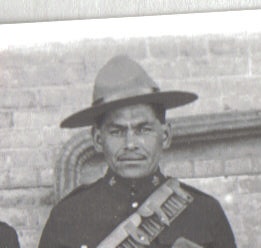
Photo: Veterans Affairs Canada
On August 18, Norwest and his spotter, Oliver Payne, established a concealed position near Fouquescourt, France. The advancing Canadians were exposed to German snipers who knew how to use the broken landscape for cover, and Norwest had returned to help clear the way.
This time, another hunter had the advantage. Shortly after Norwest and Payne established their position, a German sniper fired and struck Norwest in the head, killing him. The cowboy who had survived so many deadly encounters had been brought down by the very kind of opponent he spent years hunting.
His comrades were stunned by the loss. Lieutenant-Colonel Page ordered the place where Norwest fell to be marked, an unusual honor for an enlisted soldier, and assembled officers to salute his body as it was carried in. Canadian artillery also fired on Dead Wood, the area from which the fatal shot was believed to have come.
Norwest was buried in France, far from the cattle ranges and rodeo grounds of Alberta. His comrades erected a temporary grave marker bearing a tribute that captured their admiration.
“It must have been a damned good sniper that got Norwest.”
Bobby Dee rides the range in the wilderness of Southwest Texas. He writes about the Old West, the Southern wilderness, and the characters who make both worth exploring.