Soldier of Fortune Magazine The Journal of Professional Adventurers


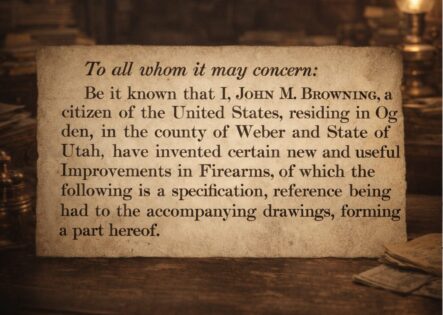
It reads like an ordinary patent. A citizen of the United States, living in Weber County, Utah, has invented “certain new and useful improvements in firearms.” No fanfare. No grand claims. Just a statement of fact. Yet those lines would lead to a sidearm that rode in the holsters of American troops from the muddy trenches of World War I to the jungles of Vietnam, and into the hands of special operations units long after it was officially replaced.
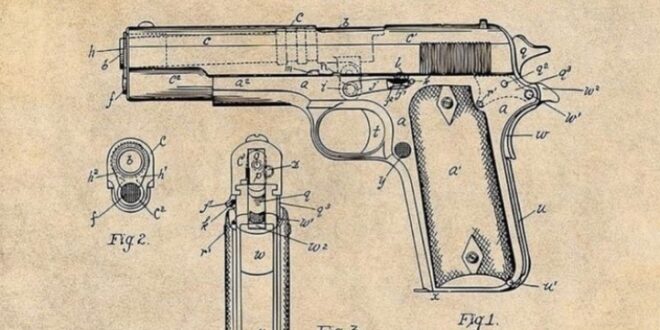
On February 14, 1911, U.S. Patent No. 984,519 was issued to a quiet Ogden man: John Moses Browning. The document itself is dry and formal. But the words in its opening lines carry weight. That preamble marks the birth of the pistol that would become the Colt M1911.
When America entered the war in 1917, the Army had 75,000 M1911’s in its inventory. Production at Colt had slowed to a trickle since the pre-war force was already equipped. Overnight, that trickle had to become a flood.
Colt pushed its lines to the limit, and then some. Still, production didn’t immediately meet the need. The War Department imposed financial penalties on Colt for missing delivery deadlines, and when Colt sought to build a larger facility to catch up, the War Industries Board turned it down, citing fuel and transportation shortages in New England. Colt brought in a second shift instead, with workers on the job for 10 hours per shift.
The guns that made it to France went where they were needed most. The M1911 proved popular with anyone who could get their hands on one.
By the end of World War I, nearly every military revolver still in service had been replaced by the Colt .45, and its performance in France during 1917–1918 secured its place as the standard American sidearm for decades to come.
The 1911 was carried by Marines on Pacific islands, paratroopers in Normandy, tunnel rats in Southeast Asia, and contractors on dusty roads half a century later. Steel, .45 caliber, and built to work when everything else had gone wrong.
Its entire history can be traced back to that one page, stamped and filed on a cold February day in 1911.