Soldier of Fortune Magazine The Journal of Professional Adventurers


by John “Wolf” Wagner
She was built for one job: find downed American airmen before the sea claimed them.
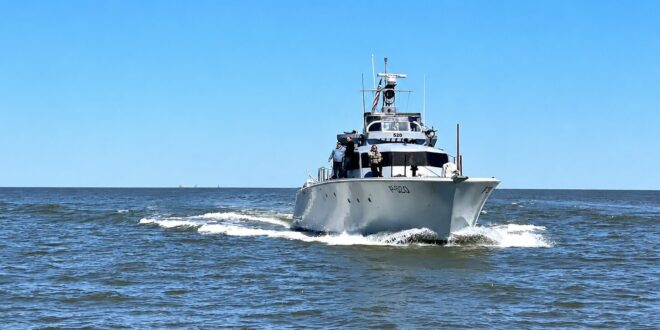
Today, the boat known as P-520 is the last surviving 85-foot World War II Army Air Forces crash-rescue boat still afloat in her original configuration. Built in Wilmington, California, in 1944, she belonged to a fleet of fast rescue craft that stood ready whenever a bomber or fighter failed to return to base. While warships hunted submarines and aircraft carried the fight to the enemy, crash boats raced toward the smoke, wreckage, and oil slicks left behind.
Every minute mattered.
The Army Air Forces designed the 85-foot crash boat to bridge the gap between the larger 104-foot rescue craft and the smaller 63-foot boats. The result was a vessel that combined speed, range, and seaworthiness in a single package. Twin Packard V-12 gasoline engines gave the P-520 the horsepower to cover long distances at high speed while carrying rescue equipment, medical supplies, and enough fuel to remain on station for extended operations.
The boat spent the war operating along the California coast, waiting for the call no crew wanted to receive. Sometimes there were survivors. Sometimes there were not.
READ MORE from Mr. Wolf: Gryphon Air: Collision Course on the Runway at Baghdad
One mission ended with the crew recovering only a pilot’s helmet, goggles, a boot, and his life raft. The man himself was never found. Even so, P-520 had done what she was built to do – reach the crash site as quickly as humanly possible and search until there was nothing left to find.
The 85-foot boats occasionally found themselves performing missions well outside their rescue role. Sister vessels are known to have supported Office of Strategic Services operations, inserting and recovering clandestine personnel and conducting missions that remained classified long after the war. The P-520 herself later served in the Aleutian Islands during the closing months of World War II and is believed to have been used as an OSS training vessel into the early years of the Korean conflict, adding another layer of intrigue to an already remarkable history.
By 1956, the newly independent U.S. Air Force concluded that dedicated crash boats were no longer needed. Improvements in aircraft reliability, helicopters, and changes in rescue doctrine made the fleet increasingly obsolete. Most of the wooden boats were scrapped, abandoned, or converted to civilian use. Few survived. Fewer still escaped major modification.
That makes P-520 something exceedingly rare—not simply an old military boat, but a nearly untouched survivor from a forgotten chapter of American aviation history.
“We restored her to have something to be remembered by for our service and sacrifice,” said Bud Tretter, part of the original crew who worked to restore the boat. “We were unable to discuss much of our service because it was classified. We knew in time the importance of P-520 was to be able to tell the story. What life was like onboard an 85’ wooden patrol boat.”
Unlike fighters, bombers, or destroyers, crash boats rarely appeared in wartime headlines. They carried little armament and claimed no victories. Their measure of success was counted in lives pulled from cold water before exposure, injuries, or enemy action finished what the crash had begun.
Kept operational by the Special Warfare & Rescue Vessel Foundation, P-520 remains a testament to that mission.
The last 85-foot crash boat in her original wartime configuration, she stands as a reminder that not every hero in World War II flew the mission or fought the battle. Some waited for the radio to crackle, started the Packards, and raced toward someone else’s worst day.
The boat steamed up the Potomac River this month to give something back during the July 4 celebrations. She is berthed at the the District Wharf in Washington, D.C. On July 1-4 she will run honor floats for WWII and Korean War veterans, offering short cruises so the old hands can stand on the same kind of deck that once waited to pull their brothers from the water. It’s a chance for the men who flew the missions to ride the boat that was built to save them.
John “Wolf” Wagner is a retired US Army officer who served three tours in Iraq and was instrumental in the founding and early operations of Gryphon Airlines. He has several other startups under his belt, and has served in politics for many years.