Soldier of Fortune Magazine The Journal of Professional Adventurers


by Susan Katz Keating
The investigation into Fancy Bear and Boston’s hidden seams continued with a meeting, a sealed envelope, and an old warning from Northern Ireland.
It’s not a bomb. It can’t be a bomb.
I stood by the window, watching the envelope from across the room. It lay on the desk where I placed it when I returned to the hotel. I moved away from the window, out of the clear line of sight. I sat on the edge of the bed. I repositioned onto the chair. The envelope did not move.
I had acquired it outside on the Boston bench where my contact left it that evening after we met. It was an ordinary office-style manila envelope, with a string wound around a button in order to close the flap. It was the kind of envelope that moves inter-office mail between co-workers. The co-workers handle it without hesitation. I did not. I assessed it first. It was thin. Maybe a dozen pages, maybe fewer. It held a thin cardboard backing of some sort, but nothing rigid. Nothing that shifted when I tilted it.
READ PART 1: The Warning: Fancy Bear and the Boston Pattern
I’d picked it up and brought it inside. I quickly regretted doing so.
This might be a bomb.
I couldn’t return it to my contact. I couldn’t put it back on the bench, or toss it into the trash. I didn’t know what the results would be.
I was in town looking into an old story that never quite was explained, to my mind. The Tsarnaev case. It had a quality I have encountered previously in long investigations, where old questions nag at you, and you want to resolve them. As part of this, I’d met with a longtime contact who knew about the case. When we met earlier, he talked to me about Fancy Bear, the Russian cyber-espionage group. He told me there were threads I should pursue related to Boston. I dismissed him until the FBI announced the results of a Fancy Bear investigation that was run by the Boston field office.
Why Boston, I wondered. Why would Russia be so focused on Boston that the local field office ran a counterespionage operation from this very town, where the Tsarnaev brothers bombed the Marathon.
I met again with my contact. That’s when he left the envelope. I had picked it up, and now I was holed up inside my room staring at it, arguing with myself.
It’s too flat for a device. It has no wires. No bulk.
Followed by:
Letter bombs don’t need wires. They don’t need bulk.
I learned that years ago, during the Troubles in Northern Ireland — first as a child in the Republic of Ireland, and later as a journalist. For years, the Irish Republican Army had run sustained letter bomb campaigns. They were small devices, flat enough to deliver by mail. The Provisional IRA sent them to military and government targets across Britain and Europe. After the 1998 Good Friday peace agreement, the Real IRA and the New IRA mailed them to British targets as recently as 2019.
It wasn’t just the IRA factions that did this. In the United States, the Unabomber mailed packages for 17 years. In 1989, a federal judge in Alabama opened a mail bomb at his home and died.
But this wasn’t my contact.
He’s not IRA. He’s not a guerrilla. He isn’t a loner nursing a grudge.
I had known him for years, and his information always was solid. He did not leave things by accident. He had told me so himself, on the secure line, confirming it without confirming. He hadn’t forgotten his envelope. He left it on the bench because he wanted me to have it.
But you don’t know who packed the envelope, or where he got the contents.
I got up and poured a glass of water. I went to the window again, and stood behind the curtain. The city was settling into the kind of late evening quiet that isn’t really quiet. Cabs. A distant siren. Someone laughing on the street below. A city at night.
I thought about the countryside. I thought about South Armagh.
I was young when I first went there. I knew a professor, a man we called Boston. He was not based in the Massachusetts town, but he had done work there that followed him back across the Atlantic. He was the kind of man who stood still in ways that told you he was paying attention. I trusted him fully.
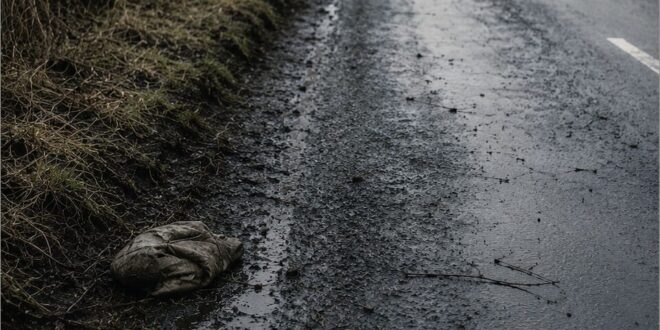
We were on a road between hedgerows the first time I saw how vigilant he was. It was the kind of road that turns according to its own rhythms, the countryside pressing in from both sides. I saw a small bundle of something in the lane ahead. I kept walking.
His hand came down on my arm.
“Leave it.”
He wasn’t loud about it. He turned me by the shoulder, and we walked back the way we came. I waited until we had gone some distance before I said anything.
“I wasn’t going to pick it up,” I said. The implication being, I’m not reckless.
“You don’t have to pick it up,” he said. “It was left by someone you can’t account for. That’s enough. Proximity is danger.”
We took a different road. I never found out what the bundle was.
Just as I didn’t know what the envelope was. I heard Boston’s voice in my head, scolding me.
You didn’t see it being packed, and you didn’t pack it yourself. You picked it up anyway.
And now I stood in the hotel room and owned that fact. I had picked up the envelope and carried it back, and now I was alone with whatever that decision had brought into the room with me.
I thought about another contact, a longtime journalist who understood what happens when bombs go off at ground level. He was among those I consulted years ago, in the aftermath of the Marathon bombings in Boston.
Goltz had spent years in the Caucasus. As a journalist, he was in the mix during war between Russia and Chechens. He understood the effects of bombings, both physical and psychological. He talked to me about the school siege at Beslan, when Chechen attackers killed 334 people — more than half of them children. He understood the deep roots of Chechen grievance against Russia, and that Moscow knew how that could play out.
“Russia viewed every last Chechen as a bomb waiting to explode,” Goltz told me.
How did they determine who was and who wasn’t a threat?
“You never know until you know,” Goltz said.
The letter bombs were ordinary mail. The school in Beslan was an ordinary building. The backpacks on Boylston Street were ordinary backpacks. The pressure cookers inside them were the kind you could buy at any kitchen store. An object does not advertise what it is. You never know, and you can’t make assumptions that endanger life.
That is the lesson Boston tried to teach me on a road in South Armagh, and I had learned it. I had picked up the envelope anyway.
Because you know him. Because he has never burned you.
He was a solid contact for years. His information had always tracked. Everything he pointed me toward had held up: The FSB warning about Tsarnaev, the pattern of Russian surveillance in Boston before and after the marathon, and now the tip about Fancy Bear. He said the GRU’s collection network was relevant to this city. He said the Boston field office was working it. He was right. The FBI confirmed that on April 7, in an advisory co-signed by the NSA and 15 partner nations. He had told me all of that before I could document any of it.
The through-line echoed what Goltz told me about Russia’s views on Chechens, including those in the Chechen diaspora.
Russian intelligence maintained a sustained interest in the Boston Chechen community before the bombing, during the investigation, and after the verdict that convicted Dzhokhar Tsarnaev of his role in the Boston Marathon bombing.
The through-line ran through what my contact told me while sitting on the bench in Boston.
He had said “possibly” twice when I pressed him on what Fancy Bear was looking for in Boston’s Chechen community. A man like that didn’t say “possibly” when he meant nothing.
He left the envelope on the bench.
It’s not a bomb.
Inside my hotel room, I walked over to the desk. I looked at the envelope under the lamp. It still was thin. Flat. Sealed with a string that someone had wound deliberately, the way you wind something you intend to be unwound.
It’s not a bomb.
I reached across the desk. I picked up the envelope. I began to unwind the string.
Crossings in Wartime is Soldier of Fortune’s continuing examination of what moves through the seams of war, where borders weaken, systems falter, and others move in.
Susan Katz Keating is publisher and editor in chief of Soldier of Fortune.