Soldier of Fortune Magazine The Journal of Professional Adventurers


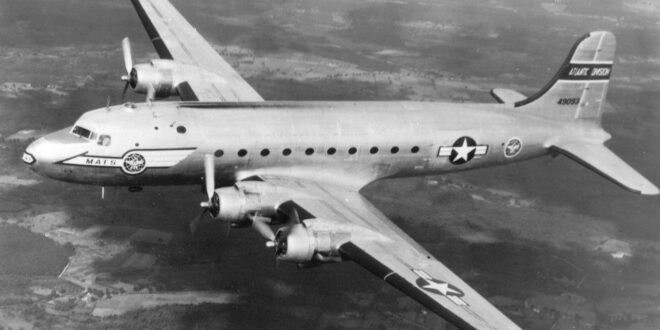
Flying old cargo planes through darkness and anti-aircraft fire, pilots had to find the hidden runway before Nigerian fighters found them.
by Gatimu Juma
The pilot pushed the throttles forward, and the cargo aircraft climbed into the humid African night. Behind him the island of São Tomé disappeared into darkness. The cockpit lights were dimmed and the radio remained silent. Ahead lay 200 miles of open water and jungle, but the real challenge was not distance. The real challenge was finding a hidden runway in the dark before a Nigerian fighter found him first.
The pilots called it Annabelle.
On the map it was nothing more than a narrow road carved through palm trees in the shrinking territory of the breakaway Republic of Biafra. On paper it did not exist at all. The Nigerian government had declared a blockade around the region and warned that any aircraft attempting to supply the enclave would be treated as hostile.
Yet every night the cargo planes came.
The mission was simple in theory, and lethal in practice. Fly in low across the Gulf of Guinea, slip past Nigerian radar, locate the improvised airstrip near the town of Uli, unload as fast as human hands could move, and get back into the air before daylight or enemy aircraft arrived. The entire operation had to be conducted in darkness because Nigerian MiG-17 fighters and Il-28 bombers controlled the skies during the day.
The crisis that created Annabelle began on July 6, 1967 when the eastern region of Nigeria declared independence as the Republic of Biafra. Nigerian federal forces moved to crush the breakaway state, and by 1968 sealed it off from the outside world. As the territory shrank under military pressure, food and medicine vanished.
READ MORE from Gatimu Juma: Ambush in the Sky, Massacre on the Ground: The Attack on Air Rhodesia Flight 825
The starvation that followed became one of the defining humanitarian disasters of the Cold War. Journalists and aid workers began reporting that thousands of civilians, many of them children, were dying every day from hunger and disease. Images of skeletal bodies spread across newspapers and television broadcasts in Europe and North America. Relief organizations scrambled to respond, but there was only one way to reach the trapped population.
The supplies had to be flown in.
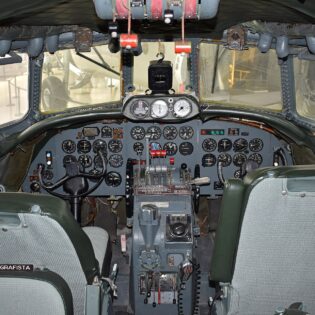
Cockpit of an L-1049G Super Constellation, used by the Red Cross during the Biafra Airlift. Photo by Alan Wilson.
The staging point for the airlift became the Portuguese island colony of São Tomé, located off the coast of West Africa. Cargo aircraft began arriving there from across Europe carrying powdered milk, grain, medical supplies, and high-protein food mixtures designed to treat starvation. Once loaded, the planes departed in darkness for the short but dangerous run to Biafra.
The aircraft were a mixed fleet of aging transports that had already lived hard lives in commercial service. Lockheed Super Constellations, Douglas DC-6’s, DC-7’s, and rugged DC-4 cargo planes formed the backbone of the operation. Some were chartered by church-based relief groups such as Joint Church Aid and Caritas Internationalis, while others were flown by independent contractors hired for their experience in difficult conditions.
The men flying them were accustomed to operating large aircraft in remote parts of the world. A number had flown bush routes across Africa or other war zones. They understood exactly what they were doing when they accepted the job.
They were running a blockade.
Each night the pilots departed São Tomé with their aircraft heavily loaded and their navigation lights dark. The flight path typically took them north across the Gulf of Guinea and then inland toward Biafra at low altitude in an effort to avoid radar detection. Navigation depended largely on stopwatch timing and dead reckoning. Radios were kept silent whenever possible because transmissions could reveal their position.
As the aircraft approached the enclave, the pilots began searching the darkness for the faint signal that marked the landing zone.
Uli Airstrip was not an airfield in the conventional sense. It was a straight section of road approximately 6,000 feet long that had been converted into a runway. Because electric lights would have made it an easy target, the strip was illuminated by rows of kerosene lanterns and burning oil drums placed along the edges.
Finding it was the hardest part of the mission.
If the pilot failed to identify the runway quickly, he could not circle and try again. Nigerian aircraft patrolled the region, and any delay increased the risk of interception. When the lamps finally appeared through the cockpit windshield, the approach had to be executed immediately.
The aircraft descended steeply and touched down hard on the rough strip. As soon as the wheels stopped rolling, ground crews rushed forward from the darkness. Most of them were young Biafran volunteers who had learned to unload aircraft at extraordinary speed. The pilots left their engines running while sacks of grain, cartons of medicine, and pallets of powdered milk were hauled from the cargo hold and dragged clear of the runway.
The entire process often took less than 10 minutes.
When the final pallet hit the ground, the aircraft turned back toward the runway centerline and accelerated into the night sky. Within moments the strip was dark again. When the sun came up, the airstrip was hidden with palm fronds.
At the height of the operation in 1968 and 1969, dozens of these flights arrived at Annabelle every night. Over the course of the war, relief organizations flew tens of thousands of sorties into the enclave, making the Biafran airlift one of the largest civilian humanitarian air operations ever attempted.
Nigerian authorities regarded the flights as illegal, and targeted them with anti-aircraft guns and fighter planes. Several planes were destroyed, and 25 aircrew lost. Among them, a Red Cross DC-7 was shot down in June 1969, killing the crew and prompting the International Committee of the Red Cross to suspend its part in the airlift.
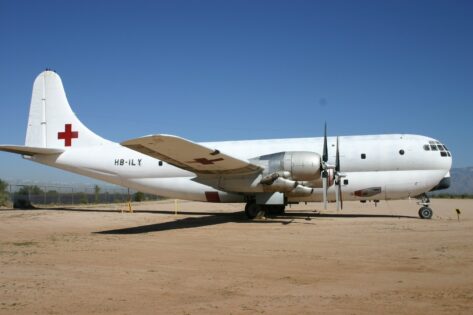
Boeing C-97 with airlift markings.
Other organizations continued flying despite the risks.
For the pilots, the nightly runs into Annabelle became a routine defined by fatigue, tension, and precision flying. Some crews completed multiple round-trip missions in a single night, landing in Biafra, returning to São Tomé to reload, and then heading back again before dawn.
They rarely stayed on the ground long enough to see the full scale of the crisis their cargo was meant to relieve. Thousands of refugees had gathered near Uli hoping to receive food from the deliveries, but the pilots usually saw only the brief chaos of unloading under dim lamps before taking off again.
By January 1970. Nigerian forces closed in on the remaining Biafran territory. The airlift that had sustained the enclave for nearly two years began to wind down. The last flights evacuated personnel and equipment as federal troops advanced toward the region.
When the aircraft finally stopped coming, the kerosene lamps along the road at Uli were extinguished.
Code name Annabelle disappeared back into the African bush, leaving behind one of the most daring airlift operations in modern history. For thousands of civilians, the nightly flights meant the difference between starvation and survival.
Gatimu Juma writes from Africa.