Soldier of Fortune Magazine The Journal of Professional Adventurers


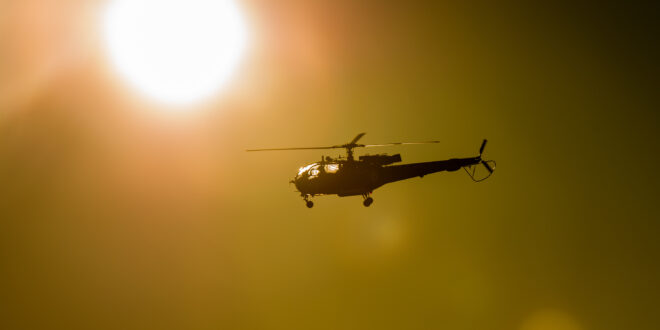
What began as a routine track near the Mozambique border turned into a sustained engagement on broken ground where visibility collapsed and distance closed quickly.
by Talor Sanders
Dawn broke over the Honde Valley under a gray sky, mist clinging to the ridges along the Mozambique border. For the Rhodesian security forces, tension was routine. Insurgent movement passed through that ground with frequency, but most contacts ended the same way, with spoor fading into bush and the trail gone cold. Patrols moved constantly, and men slept in their boots.
Geography defined the fight. The valley served as a corridor for ZANLA fighters moving south toward farms and settlements. The border was close, the terrain broken, and the cover deep enough to conceal movement until it was too late to react. Usually, by the time security forces reached the area, there was nothing left to engage.
That morning, November 15, 1976, the trail remained.
The unit dispatched was 3 Commando of the Rhodesian Light Infantry, known as the Lovers. Within the RLI, they were regarded as aggressive professionals, accustomed to closing with the enemy at short range. The nickname, stitched onto their gear, carried an edge of irony that matched their reputation.
READ MORE about the Rhodesian Bush War: The Altena Farm Attack
Intelligence placed a group of insurgents near a kopje, a steep, rocky hill rising out of the surrounding bush. In that terrain, such ground favored the defender. From the summit, a force could observe movement along the approaches and break up an assault before it gathered momentum.
By 5:45 a.m., 3 Commando moved into contact, supported by the 4th Tracker Battalion and elements of the Rhodesian African Rifles. The ascent began under limited visibility, with the slopes broken by rock, scrub, and thorn. Movement came in short bursts, from cover to cover, with no clear line of advance.
Waiting on the hill were 31 ZANLA insurgents. They had selected the position with care, embedding themselves among rocks and vegetation where fields of fire overlapped and approach routes narrowed. To them, it was an ambush position built around terrain that limited visibility and forced attackers into close engagement.
To the men moving uphill, it meant one thing. The position would have to be taken directly.
The first shots came fast and close. The kopje broke the fight into fragments, with small elements pushing forward under fire while others worked to flank through scrub and stone. Visibility collapsed as the ground rose, and contact came without warning. Engagements were measured in seconds and meters.
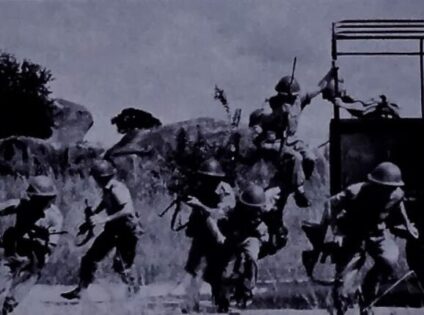
Rhodesian Light Infantry, 1963.
As the unit advanced, 3 Commando fought not only the insurgents but the terrain itself. “Wait-a-bit” thorns tore at uniforms and skin, catching on webbing and slowing movement. The slopes forced a steady climb through broken ground where footing shifted and cover was never certain. Progress came at a cost, and it came slowly.
The opening engagement set the tone for the next twelve hours. Supported by the Rhodesian African Rifles and the 4th Tracker Battalion, 3 Commando advanced into a prepared ambush that forced contact at close range and offered no clear route forward.
Two insurgents lay concealed in a ditch along one of the approach lines. They held their fire until the range collapsed to almost nothing. Corporal Nutley of the 4th Tracker Battalion came onto them at less than a meter.
The exchange was immediate. Nutley fired first, killing both men before they could bring their weapons fully to bear. As his rounds struck one of the bodies, grenades carried by the insurgent detonated, sending shrapnel into Nutley’s face at close range.
He remained in the fight.
For the next three hours, Nutley continued moving with the unit, wounded and bleeding, engaging additional targets as the advance pushed forward. Contact came repeatedly at short distances, with insurgents holding positions until the last possible moment. By the time he was evacuated, he had accounted for six more insurgents.
Across the kopje, the defensive position began to strain under sustained pressure. The ground still favored those holding it, but the attackers continued to close the distance, forcing engagements that denied the defenders time to reposition.
Fireforce was called in.
The sound of approaching helicopters cut across the valley as the battle was already underway. Alouette III aircraft came in low, bringing command oversight and additional firepower into a fight that had settled into close, deliberate movement.
Captain Kip Donald commanded the Fireforce from the K-Car, directing the battle from above. From his position, he coordinated ground elements and controlled the placement of aerial fire. A G-Car was brought into position, delivering sustained suppressive fire onto identified points on the slope to disrupt remaining insurgent positions.
From the aircraft, four-man sticks were deployed onto the kopje, reinforcing the line and tightening control over the terrain. The enclosure began to take shape as additional elements were placed to cut off movement and prevent escape.
On the ground, 3 Commando and supporting units continued their advance under direction from above. The Fireforce structure added coordination and reach, but it did not change the nature of the fight. Movement remained slow, and every position had to be cleared.
Sergeant Laurie Ryan of the 4th Tracker Battalion directed his men to check each position methodically. The insurgents used the terrain to full advantage, remaining concealed in rock and brush until contact was unavoidable. Engagements took place at extremely close range, often measured in feet.
The terrain dictated everything. The slopes forced a deliberate pace, and even with aerial support, speed could not be increased without unacceptable risk. Men moved from boulder to boulder, advancing in short bounds and maintaining pressure across the hill.
The remaining hours offered no break in contact. Fatigue set in, but the advance continued. The line tightened as more ground was taken and fewer positions remained for the defenders to hold.
By the end of the engagement, 3 Commando secured the high ground.
Thirty-one insurgents were killed. A weapons cache, including AK-47s, RPGs, and mortars, was recovered. Supported by the Rhodesian African Rifles and the 4th Tracker Battalion, the unit consolidated the position as the fighting came to an end.
The cost was not negligible. One member of the unit was killed, and another wounded.
The men of 3 Commando boarded the Alouettes and returned to base. Their uniforms were torn, their bodies exhausted, and the operation complete.
Talor is a firearms T&E consultant and military historian focused on the Cold War to the GWOT. A former competitive shooter, he also serves as an LPCC-S, specializing in trauma and combat-related PTSD.