Soldier of Fortune Magazine The Journal of Professional Adventurers


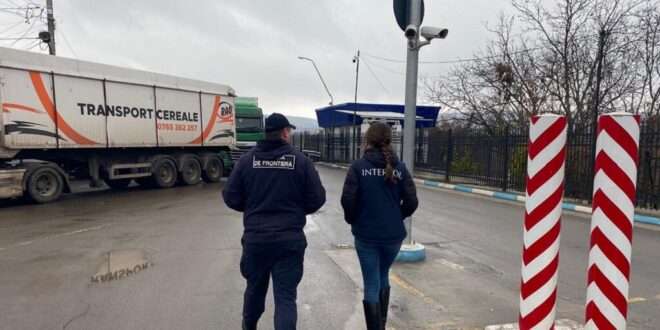
A fixer who says he connects buyers and sellers moving goods out of Chernobyl describes a trade that has slowed but grown more profitable, building on decades of documented smuggling from the contaminated Exclusion Zone.
by A.R. Fomenko
VIENNA BUREAU – The truck rolled to a stop at the border, crossing from Ukraine into Poland. It carried 20 tonnes of copper-nickel pipe. When inspectors ran a Geiger counter over the cargo, the needle spiked. The load was highly radioactive, 15 times above permissible levels. The pipes had come from the Chernobyl nuclear complex. Someone had processed the paperwork. Someone had waved the truck through the checkpoints inside the Chernobyl Exclusion Zone.
That was 2016. It remains a visible edge of a system that flourished for decades, moving contaminated material out of the exclusion Zone under legitimate cover. Timber, amber, scrap metal, berries, mushrooms, fish, and charcoal all passed through the pipeline. The traffic has diminished from its peak, but the margins have grown, one fixer told Soldier of Fortune.
“Before the war, I was busy with Chernobyl,” said Oleg A., who says he charges clients to connect them with people who can move goods through and around Ukraine. “Now I am not so busy, but I make more money.”
Oleg said his work has included making connections between sellers, buyers, and transporters for goods moving out of the Zone.
Soldier of Fortune did not accompany him or his clients during their activities. This account is based on what Oleg told us, interwoven with documented cases and statements from officials. What he described fits decades of documented evidence and conditions that have worsened since February 2022, when Russia invaded Ukraine.
The Zone
The Chernobyl Exclusion Zone covers approximately 2,600 square kilometers of northern Ukrainian forest, abandoned villages, and decaying Soviet infrastructure. The Zone is centered around the remains of Reactor Four, which exploded on April 26, 1986. The blast released radioactive contamination on a scale often compared to hundreds of Hiroshima bombs. More than 100,000 people were permanently evacuated. Access is strictly controlled, in theory.
In practice, though, watchdog groups noted that access is available to certain people. It includes those who pay in hope of reaping big profits.
“This is what feeds all the [corrupt] freeloaders who cling to the Zone like leeches and live off it,” Roman Bochkala told a journalist six years ago. The Zone, in his accounting, has not functioned as a sealed environment so much as a source of extractable material, enabled by documentation and intermediaries.
WHAT IT’S WORTH
The Chernobyl plant is an enormous industrial facility. Its four reactors and associated infrastructure contain thousands of tonnes of high-value non-ferrous metal. Copper-nickel alloy brings strong prices on global scrap markets. Copper wiring runs throughout the plant. The site is surrounded by pine, oak, and ash.
Bochkala spent years tracking the Zone’s shadow economy. He noted years ago that the smuggling networks have brought in tens of millions of dollars.
THE OPERATION
Smuggling began as soon as the Exclusion Zone was created.
Some accounts from the immediate aftermath of 1986 describe guards under orders to use deadly force against looters. Some orders were carried out. Many were not. Some guards simply made deals; a sufficient bribe could get a thief waved through with whatever he could carry. By the time the Soviet Union collapsed and Ukraine inherited the Zone, the precedent was set. The Zone was a resource.
By the 1990s, metal smuggling was rampant. One repeat visitor told Al Jazeera: “I’ve seen entire abandoned trucks and tonnes of metal disappear from places where you can get a lethal dose of radiation within a minute.”
In 2007, a stockpile of copper-nickel tubes from the Buriakovka radioactive waste burial ground was intercepted leaving the Zone at 23 times above legal radiation limits. In May 2009, 10 tonnes of metal disappeared. That September, Ukrainian intelligence stopped a shipment of 25 tonnes of untreated radioactive scrap.
The deeper problem was institutional. A court in Kyiv found Ihor Hramotkin, the director general of the Chernobyl plant itself, guilty of selling thousands of tonnes of decommissioned scrap metal at deliberately low prices and embezzling more than $700,000. State auditors found approximately 7,000 tonnes of scrap metal missing from plant storage.
In 2011, three plant officials were convicted and sentenced to five years for stealing 24 tonnes of copper-nickel pipe directly from the territory surrounding the sarcophagus, the structure encasing the remains of Reactor Four. The pattern was consistent: insider facilitation, forged paperwork, contaminated metal moving through official channels. Bochkala estimated that at the height of the looting, more than 200 tonnes of radioactive metal were leaving the exclusion Zone every week.
THE WAR MADE IT WORSE
On February 24, 2022, Russian columns crossed from Belarus into the exclusion Zone at 5 a.m. By afternoon they had seized the nuclear power plant. For 37 days, Russian forces occupied Chernobyl.
What they did there has been extensively documented. They looted it without any apparent awareness of what they were handling.
They drove without protective suits through the Red Forest, the most heavily contaminated area of the Zone, kicking up clouds of radioactive dust. They dug trenches in contaminated soil. Reports later circulated of radiation-related illness among some of the troops exposed there.
Zone engineer Vladimir Verbitsky told BBC Ukraine: “The Russians plundered all the checkpoints, as well as the monitoring centers of the Exclusion Zone, laboratories, and everywhere else where there was some kind of equipment.”
Plant shift leader Volodymyr Falshovnyk watched soldiers struggling to fit a stolen room heater into a car as they withdrew.
Ukraine’s State Agency for Exclusion Zone Management documented that Russian forces stole and destroyed 133 radioactive sources with a total activity of approximately 7 million becquerels.
“Even a fraction of this activity,” the agency stated, “is lethal if handled unprofessionally.” One safety official reported a Russian soldier handled a sample of cobalt-60 with his bare hands. The Geiger counter went off the scale in seconds.
When carrying such an item for two weeks, “radiation burns are guaranteed and radiation diseases and non-reversible processes in the body begin,” the agency wrote.
When Ukrainian forces retook Chernobyl on April 3, 2022, they inherited a Zone harder to monitor than at any point since the Soviet era.
The destruction recreated many of the same vulnerabilities that had long enabled smuggling.
THE REACH
In 2007, charcoal produced from Zone timber was found in Ukrainian supermarkets at four times above permissible radiation limits. Consumers had no way to know. Zone timber has been documented moving through processors whose products may enter European supply chains.
Radioactive contamination is invisible without a Geiger counter. It does not rust, does not smell, and does not discolor the metal it inhabits. A length of copper-nickel pipe from a Chernobyl reactor system looks identical to clean pipe of the same specification. The end buyer, whether furniture manufacturer, construction contractor, or scrap dealer, has no mechanism for detection unless someone in the chain runs a meter over the material, and most do not.
ONLY THE PROFITS
The Chernobyl Exclusion Zone will remain radioactively contaminated for centuries. The Zone is not going away.
What border inspectors found in that truck in 2016, with 20 tonnes of pipe glowing at 15 times the legal limit and paperwork in order, was a moment of accountability. Smaller shipments of other illicit goods from Chernobyl still get through, according to Oleg, under the right conditions.
Those who work the system see only the profits.
“People pay me for connections,” Oleg said. “I don’t ask any questions. I provide what they pay for. After that, I am done.”
The work Oleg described carries risk at every stage. This includes talking to Soldier of Fortune about work that could place him on official radar and possibly land him in jail. So why do it?
“I am used to living this way,” Oleg said. “For me, it is normal.”
He did not sound like a man making an invitation.
In wartime, borders do not disappear. They become places where oversight fails, systems weaken, and men willing to exploit both find room to work.
Crossings in Wartime is Soldier of Fortune’s continuing examination of what moves through the seams of war, where borders weaken, systems falter, and others move in.
A.R. Fomenko is based out of Soldier of Fortune’s Vienna Bureau.