Soldier of Fortune Magazine The Journal of Professional Adventurers


by Susan Katz Keating
Graphic combat imagery circulating through exile networks raised a darker possibility. The money may have mattered less than identifying who would give it – and who would not.
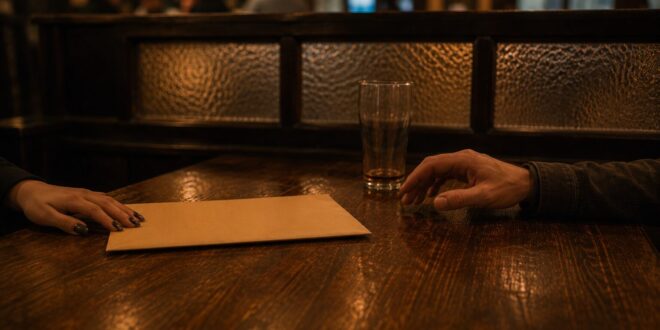
“What do you make of these, Jocko?” I slid the packet across the table as he set down his empty pint.
We sat in a far snug at the back of the pub, where no one could hear us above The High Kings and chatter. Anyone approaching would be warned away with a look before they got close enough to see behind the divider.
Jocko took the packet. He lifted an eyebrow, the same way he had across a lot of tables in a lot of pubs over the years. “Now what…” he muttered.
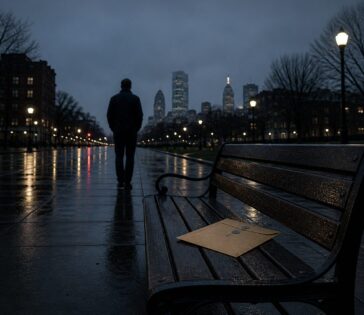
I didn’t know now what. That’s why I was sitting across from him. Earlier that day, I acquired the envelope on the Boston bench where my contact left it for me to find. It was an ordinary office-style manila envelope, with a string wound around a button in order to close the flap. Back inside my hotel room with the envelope, I regretted having it. I thought it might be a bomb, and argued with myself before deciding that a trusted contact would not try to blow me up. So I opened the envelope. I looked at the contents.
READ MORE: The Warning, Part 1: Fancy Bear and the Boston Pattern
Alone in my hotel with the envelope and its contents, I thought for a moment. I pulled my phone out of the Faraday bag, and called Jocko.
“Hey, it’s me. I’m in town. Can we meet?”
“Same place?”
“I’ll be there in an hour.”
I had been coming to Boston for more than a decade, talking to people who choose their words the way you choose your steps on ice – carefully, one by one. This time, I was in town pulling old threads that never were tied off after the Marathon bombings. I was looking for a story. I did not expect the story to find me first.
It was complicated, but part of it involved humanitarian fundraising and wartime violence. Which is why I turned to Jocko. He knew Boston fundraising from the inside; how it worked, how money moved, and how you could tell the difference between a genuine humanitarian appeal and an operation wearing one as cover. Plus, he had seen battlefield wounds.
The pub was the kind of Irish place that doesn’t need to advertise. It asserts itself through dark wood, the smell of spilled libations worked into the floorboards over decades, and a bartender who knows you by name. Boston does this kind of room like they do in Dublin, and Jocko had been comfortable in both for as long as I’d known him.
I held back for a bit while we chatted over lager and caught up with each other’s lives. When he drained his pint, I gave him the envelope.
He opened the packet with care and retrieved the photos. He worked through them one by one, not rushing, not lingering. I knew from the rhythm of his hands which one he was looking at. The leg on the table. The trunk without limbs. The gaping holes in the skin. They looked like something from the back of a butcher shop — raw meat, blood, and bones emerging through shreds of muscle. They were bright red wounds carved from the bodies of men with pale skin.
The images were horrific. They also had an artistic quality. The men seemed to be in a studio instead of the field or a hospital. Someone had composed those images carefully. The framing was deliberate. The effect was designed to hit you before you could think, to bypass the brain entirely and go straight for the wallet.
The photographs were moving through the Chechen exile community around the world, attached to a simple message: these are your people, they are suffering, and you have an obligation to help pay for their medical care. Whoever was circulating the photos sent them with a desperate plea: Save our boys… They need urgent medical care… We need medicine, equipment, supplies… We have only received two donations today… Any amount helps. For convenience, a credit card number was included.
Jocko looked at the photographs for a long time. The bar noise went on around us.
“Where did you get these.”
I didn’t answer.
We had been in enough rooms together, across enough years and enough countries, that silence between us carried its own precise vocabulary. He knew I wasn’t going to tell him. He didn’t ask a second time. I could sense him calculating, not about the photographs, but about me. About what it meant that these had found their way to a reporter in Boston in the spring of 2026, asking questions about this particular community at this particular moment.
He took a second pass at the stack. He spoke without nuance, with the flat certainty of a man who had seen the real thing too many times to be fooled by an imitation.
“These didn’t happen in combat,” he said. “Too clean. Too deliberate.” He fanned them out in his fingers, like a hand of cards. “Someone took their time.”
He tucked them back inside the envelope and pushed it back across the table. “This is for the camera. Whoever did this wanted a specific image and they got it.”
The ask was money. What it actually was collecting was something else entirely.
The community being targeted was one I had come to know in Boston across years of reporting – including time spent there writing about Katherine Russell, the American woman who married Tamerlan Tsarnaev. Members of the exile community spoke to me directly during that reporting. Some had known the brothers. Some were hostile, and tried to scare me into leaving town. Others said they bore no responsibility for two men who barely knew Chechnya and killed strangers at a marathon finish line. What they shared was the belief that I, an outsider, could not possibly understand their history.
These were people who carried the collective memory of ancestral trauma. Of being deported en masse by Josef Stalin, who shipped them aboard cattle cars into a brutal winter landscape where many had no shelter beyond the holes they dug with their bare hands. These were people who gained a reputation for extraordinary toughness. Alexander Solzhenitsyn, who encountered Chechens in exile, wrote in The Gulag Archipelago that they occupied a unique status in that stark environment: “Everyone was afraid of them.”
Thomas Goltz, a journalist who lived among them at war, described the game of Chechen Roulette in his Chechnya Diary: “Gather six pals at a table, remove a grenade from your coat pocket, pull the pin, and set it on a plate. The last man who dives under the table wins, as it were.”
Their toughness fed into a longstanding enmity between Chechnya and Russia stretching across the centuries and into modern lore. One novelist captured the Chechen attitude with precision: Moscow authorities deserve everything that happens to them, a Chechen character says. “They deserve us.” Moscow, for its part, understood how that grievance could play out. After the 2004 school siege at Beslan, when Chechen attackers killed 334 people, “Russia viewed every last Chechen as a bomb waiting to explode,” Goltz told me. “They were vigilant.”
That vigilance had a specific Boston address. In 2011 Russia’s FSB sent the FBI a detailed written warning about Tamerlan Tsarnaev, saying that he had become a follower of radical Islam and was preparing to travel to the Caucasus to join underground groups. The FBI opened an assessment, interviewed Tsarnaev, searched databases, found nothing actionable, and closed the case. Tsarnaev went to Dagestan the following January and stayed six months. The FSB, which maintained intensive surveillance across that region, never reported back on what he did there. Three months after he came home, the bombs went off on Boylston Street.
Some analysts believe Russia’s warning was a genuine counterterrorism tip that failed through dysfunction; others believe it was designed to get the FBI to surveil a Chechen dissident on Moscow’s behalf. This much is certain: Russian intelligence had a sustained interest in the Chechen exile community before the bombing and after.
Ramzan Kadyrov, meanwhile, has been running another type of operation; one built around image and social media. His fighters posted combat videos from empty buildings in clean uniforms, in operations that open source investigators placed firmly inside Russia. His front-line visits were tracked by analysts to locations far from any fighting.
According to one journalist, he manufactured more than just public relations. In 2006, Russian journalist Anna Politkovskaya told Radio Free Europe that she planned to write about two civilians who were captured, and their bodies were used to stage fake battlefield imagery. Politkovskaya was murdered on the day she planned to publish her story. The story died with her, but the method she spoke of fit a particular niche: Image is reality.
The photographs I showed Jocko fit that tradition. The photos were too clean. Too deliberate.
Staged or not, anyone could have made them. No matter who was behind the camera, though, a solicitation built on those photographs produced more than money. Every person who donated identified themselves. Every person who refused told a different story about themselves. The network drew its own map.
READ MORE: The Warning, Part 2: Fancy Bear, Boston, and Bombs in the Hedgerows
The photographs were never about the money. They were about mapping out who in this community would open their wallets, and who would not.
Across the table Jocko had gone quiet in the way he went quiet when he was thinking past the conversation in front of him. I had seen it before. In Belfast. In a different pub, in a different season, with different material that turned out to mean something nobody wanted to say out loud.
“You do understand,” he said, “that having those photographs puts you on a map as well.”
“I know.”
“Do you.” He looked at me across the table one more time. “Leave it alone, Suzanne.”
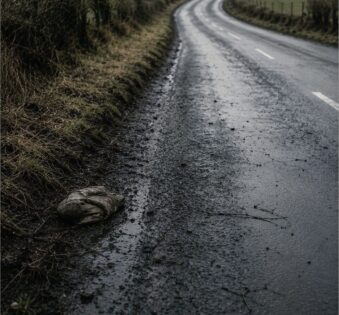
It was the same thing our old acquaintance, a man we called Boston, told me decades ago in South Armagh when we saw a bundle by the side of the road.
“Leave it alone.”
Back then, Boston had said it with precision. Now, Jocko said it with warmth. He always did. The warmth and the warning came from the same place, a long time ago, in a world that taught him at close range what happened to people who stayed inside the frame too long.
He paid our tab in cash. He walked into the kitchen. I sat alone, again, with my thoughts.
Who sent out the photos? Was it Russia, Chechnya, the Feds, or someone else entirely? And why? I still didn’t have an answer, and I still didn’t know why my contact gave me the photos within the context of another investigation. The only thing I knew was that I needed another meeting with him. And he might not agree to that at all. In this world, you don’t get to decide when a source is ready to talk. You wait. You stay available. You keep reporting with what you have, and you hope the next meeting comes before the story moves on without you.
I picked up the envelope. I walked out the front and into the Boston night.
Crossings in Wartime is Soldier of Fortune’s continuing examination of what moves through the seams of war, where borders weaken, systems falter, and others move in.
Susan Katz Keating is publisher and editor in chief of Soldier of Fortune.