Soldier of Fortune Magazine The Journal of Professional Adventurers


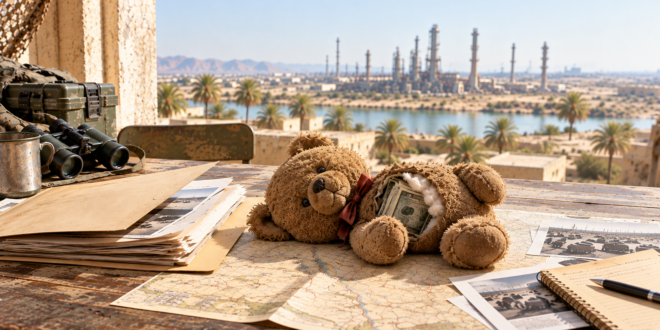
Bricks of cash, luxury cars and secret accounts exposed a sprawling reconstruction fraud. Years later, a tip sent Soldier of Fortune back into cases that never reached an ending.
by Susan Katz Keating
They bought luxury cars, opulent properties, high-end watches, first class travel, and more. The only catch was, they couldn’t afford such trappings of wealth. Their spending sprees attracted attention and tip-offs that led investigators to discover they had siphoned millions of dollars from U.S. reconstruction funds in Iraq.
“These defendants actually took bricks of stolen cash… and smuggled them out of Iraq and back to the United States for their own personal use,” the prosecutor said. This was in 2007, when Paul McNulty, the Deputy Attorney General at the time, announced indictments against five people for their roles in a complex scheme involving the theft of millions of dollars from the Coalition Provisional Authority in Iraq. Now, thanks to a tipster who contacted Soldier of Fortune to say some investigations remain open, we looked for other cases where alleged perps have not been brought to justice.
“Just because they haven’t arrested them doesn’t mean they’re not being tracked,” said the tipster, who is not authorized to contact the media and who spoke to us on the condition of anonymity. “You’re good at digging,” the tipster said. “Start digging.”
The situation overall is no secret.
“There have been numerous accounts of stolen funds from the Iraqi transition funds program over the years,” said Maj. (ret.) John Wagner, an Iraq War veteran who was there with the Army in 2003-05, and as a contractor in 2007-09. “I have heard of continuous or continued cases that are still open in order to recover these funds and track down those who stole them.”
READ MORE about profiteering in a conflict zone: Crossings in Wartime: Chernobyl – Metal From the Dead Zone
The cases are rooted in the freewheeling largesse that the U.S. government sent to Iraq during the war and reconstruction. In those days, the U.S. loaded billions of dollars in shrink-wrapped cash aboard cargo planes and flew it into Baghdad. A former senior official with the Coalition Provisional Authority described a surreal scenario involving the money when speaking for a documentary in 2007.
“Iraq was awash in cash — in dollar bills. Piles and piles of money,” Frank Willis told Guardian Films. “We played football with some of the bricks of $100 bills before delivery. It was a wild-west crazy atmosphere, the likes of which none of us had ever experienced.”
Later, vast sums of money from the cash airlifts, reconstruction contracts, oil revenue, and other sources were unaccounted for. The Office of the Special Inspector General for Iraq Reconstruction (SIGIR) initially flagged $6.6 billion as missing, and said the loss could be the largest theft of funds in national history.
“The full story on the use of billions of U.S. dollars for reconstructing Iraq will forever remain incomplete,” SIGIR officials wrote in their final report.
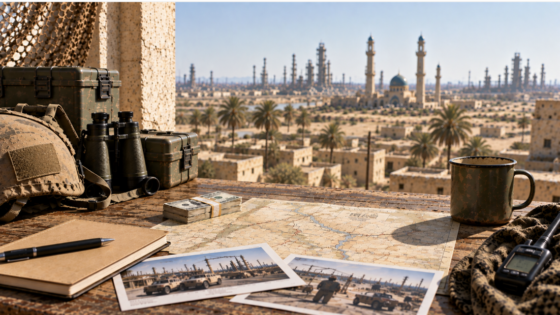
For me, the tip sent the story back to an older Square One. In February 2007 I attended McNulty’s press conference in Washington, D.C., fully intending to follow the trail the prosecutors laid out. By the beginning of March, I had leads on unsolved cases. Then came the Virginia Tech massacre, which I covered for PEOPLE magazine, and the Iraq trail went cold. Nearly two decades later, the tipster sent me back to the story, and the trail federal officials laid out that day.
The Money Bin
The 2007 indictments involved three Army Reserve officers — Col. Curtis Whiteford, Lt. Col. Debra Harrison, and Lt. Col. Michael Wheeler — who oversaw a share of the $2.1 billion the Coalition Provisional Authority controlled in south-central Iraq. Prosecutors say they steered roughly $8 million in reconstruction contracts to a single favored company. In return, the indictment alleged, the accused took a Nissan sports car, a Cadillac Escalade SUV, a Breitling watch, real estate, and more.
“In one trip, one defendant carried more than $300,000,” McNulty said. They were the tip of a much deeper iceberg, officials told me at the time.
The smuggling methods were bizarre, comical, and audacious. Army Major Roderick Sanchez, a contracting officer, pulled in more than $200,000 worth of illicit benefits before he was charged and pleaded guilty.
Elsewhere, the cash itself moved inside creative packaging. Some was hidden in a military vest, sewn into a Santa Claus suit, or stuffed inside a toy animal.
One former Army captain simply mailed the money home. Michael Dung Nguyen was charged in 2009 after prosecutors alleged he stole more than $690,000 while deployed to Iraq. Authorities said Nguyen opened accounts at several banks, deposited the money in amounts intended to avoid detection, and went on a shopping spree. He bought a 2008 BMW, a 2009 Hummer H3T, computers, and more, officials said.
The investigations were public knowledge. But even as authorities held the 2007 press conference telling us about their indictments, another scheme was underway.
The Contract
At Contingency Operating Base Speicher, just outside Tikrit, the paperwork that decided who got rich in postwar Iraq passed across a handful of desks. One of them belonged to John Alfy Salama Markus, a U.S. Army Corps of Engineers employee. His job was to sign off on which contractor would rebuild what. That gave him access to information bidders were not supposed to have.
According to prosecutors, Markus began feeding confidential bidding information to a Baghdad-based construction firm and its owner, a British-Iraqi businessman named Shwan Al-Mulla, authorities said. One of the projects involved the Bayji Oil Refinery, one of the three largest refineries in Iraq. According to the indictment, Al-Mulla’s company won a $6.2 million contract to repair the refinery in March 2007 after paying Markus a $350,000 bribe.
Prosecutors say the infrastructure deals secured through the scheme totaled more than $37 million, running from March 2007 to 2009.
The Open File
Markus and Nouri pleaded guilty. Al-Mulla was charged and never showed up. The indictment sat under seal for an entire year before a judge unsealed it in January 2021. When the Justice Department finally announced the case publicly, prosecutors said Al-Mulla remained at large. He still is.
When Soldier of Fortune reviewed the federal docket in Al-Mulla’s case, we saw how little has happened since he was charged. Only five entries populate the record across more than six years. The unsealing might look, at first glance, like the case waking back up. It isn’t. The docket records no arrest, no arraignment, and no appearance from a defense attorney.
Not Done Yet
Al-Mulla’s file, and the money-bin schemes that came before it, are threads in a much larger tapestry of fraud that grew up around the more than $60 billion the United States poured into rebuilding Iraq. The defendants used government funds as “their own personal ATM machines,” McNulty told us in 2007.
The SIGIR watchdog initiated 639 criminal investigations over its nearly decade-long existence, producing 112 indictments and 90 convictions by the time the agency formally closed in October 2013. That did not necessarily close the books on Iraq reconstruction fraud.
Responsibility for remaining cases passed to several agencies, including Army criminal investigators and the FBI. What are they looking for?
The same patterns that caught others, the tipster told me: spending that didn’t fit the paycheck, and money being used to buy homes, start businesses, establish offshore accounts, and in some cases build new identities.
“Whether it was cash or other funds that were dedicated to the Iraq mission, they all deserve to be checked out,” Wagner said.
The passage of time has not put anything on hold, one official told us. Nor has it lifted the consequences.
Susan Katz Keating is the publisher and editor-in-chief of Soldier of Fortune Magazine.