Soldier of Fortune Magazine The Journal of Professional Adventurers


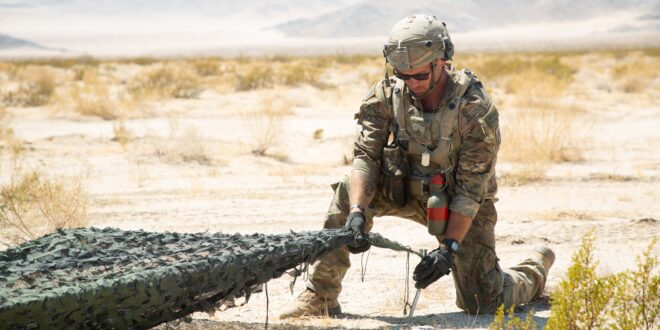
At AUSA, Army leaders described how American forces and potential opponents are learning from current wars.
by John “Wolf” Wagner
American troops in the next conflict may face opponents who have learned firsthand how to fight the next war, Army commanders said.
“That’s one of the most pressing things that we see right now is the fact that we have an adversary who is being trained in the crucible of combat,” said Gen. Xavier Brunson, commanding general of U.S. Forces Korea. Brunson made his remarks on Oct. 12 during a panel at the Association of the U.S. Army’s 2026 Annual Meeting and Exposition in Washington, D.C.
North Korean troops fighting for Russia in Ukraine have adapted in real time. They have learned much about logistics and troop transport, and have honed their skills in drone warfare, trench fighting, mortars, and rural combat, sources told Soldier of Fortune.
“Their engagements now are markedly different from their initial engagements,” Brunson said, noting that “they realized they had to change what they were doing.”
READ MORE: War Predators in Ukraine: They Come to Study the Killing Fields
American forces are learning, too, from actions against Iran, according to Gen. Ron Clark, who leads U.S. Army Pacific.
“A lot of the things that are happening right now in terms of long-range precision fires, intermediary missile defense and the lessons that we’re learning from them, we’re able to bring a lot of that to our potential challenges in the Pacific,” Clark said.
In previous years, AUSA panels have addressed an increasingly complex threat environment, focusing on counterintelligence and counter-drone capabilities, among other things. In 2025, Brig. Gen. Travis McIntosh of the 101st Airborne Division talked about a small, disposable drone. Colonel Richard Dempsey of Army Counterintelligence Command addressed “the threat that we can’t see.”
This year, commanders discussed making American forces harder to find.
“If they can see you, they can hit you,” Clark said. “If they have an opportunity to return fire, they will.”
Protective measures include old-style camouflage and cutting edge electronic warfare to interfere with adversary sensors. Some of the floor offerings at AUSA reflected those concerns, with multiple counter-drone systems on display. The equipment pointed to the same challenge commanders discussed in the sessions, of finding an incoming threat before it finds American troops.
“We look at all of it holistically,” Clark said.
That includes keeping forces on the move to avoid being pinpointed for attack.
“We won’t be moored in place,” Brunson said. “We don’t make ourselves the target.”
Commanders noted that their work occurs amid greater synergy between China, Iran, North Korea, and Russia. The war in Ukraine has drawn military support from North Korea and Iran, while China remains a major economic and diplomatic partner for Moscow.
Said Brunson: “They’re colluding right now.”
John “Wolf” Wagner is a retired US Army officer who served three tours in Iraq and was instrumental in the founding and early operations of Gryphon Airlines. He has several other startups under his belt, and has served in politics for many years.