Soldier of Fortune Magazine The Journal of Professional Adventurers


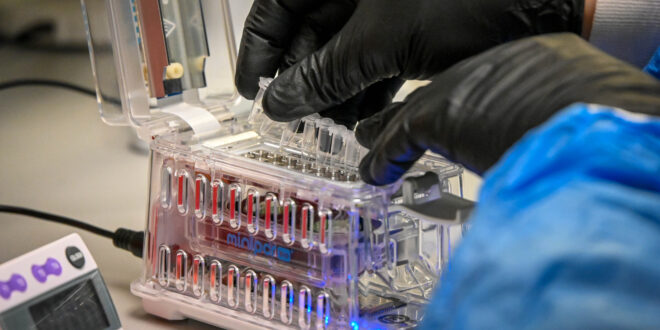
A scientist is dead, workers were confined inside a Siberian anti-plague institute, and Washington is pressing Moscow for answers.
by Stephen Caldwell
Officials swept through the building, locking doors and placing workers in isolation. Inside the Siberian facility, lives froze in place. “They’re sleeping there, on the floor and on chairs,” said Roman, whose relative works at the Anti-Plague Research Institute. “They knew something bad must have happened,” said another. They were right. Two employees had fallen ill, and one was dead.
The cases opened a rare window into Russia’s anti-plague network, a system built to hunt lethal disease across some of the most remote territory on earth. For more than a century, Russian scientists have gone into plague country, trapping rodents, collecting fleas, and carrying potentially lethal specimens back to the laboratory.
Plague is infamous for the Black Death that swept through medieval Europe. The disease never disappeared. The bacterium that causes it, Yersinia pestis, survives in nature, circulating among wild rodents and the fleas that feed on them. These natural reservoirs can persist for decades without producing a major human outbreak, allowing a disease associated with medieval cities to survive quietly in remote landscapes.
Russia has vast areas where those reservoirs exist. Across Siberia, the Caucasus and the steppe stretching toward Central Asia, plague has long circulated among wild animals, sometimes hundreds of miles from major cities and sophisticated medical facilities. Russian authorities faced a problem created as much by geography as by disease: if plague appeared in an isolated settlement, specialists needed to find it before it began moving through the human population.
READ MORE: Mysterious ‘Red Mercury’ Was the Shadow World’s Answer to a Mad Scientist’s Dream
Russia began building specialized anti-plague organizations before the Bolshevik Revolution. The system expanded dramatically under Soviet rule, growing from roughly a dozen facilities into a network of more than 100 institutes, stations and other installations. Its scientists ventured into plague country. Field teams trapped rodents, collected fleas, examined animal colonies, and returned with samples for testing. Epidemiologists mapped areas where plague was active and watched nearby communities for signs that the disease had crossed into humans.
The Soviet Union eventually possessed a scientific corps with extensive experience finding, handling and studying pathogens that most physicians would never encounter.
During the Cold War, parts of that same scientific system were drawn into the Soviet Union’s secret biological-warfare programs, when expertise acquired another purpose. The anti-plague system became the lead agency for a Soviet biological-defense program known as Project 5. By the mid-1970s, parts of the system also performed work for the offensive biological-warfare program known as Ferment.
Ken Alibek knew that world from the inside. Born Kanatjan Alibekov in Soviet Kazakhstan, he rose to become first deputy director of Biopreparat, the organization at the center of the Soviet biological-weapons program. From 1983 to 1987 he commanded the biological-weapons production facility at Stepnogorsk, where plans called for wartime production of anthrax, plague and tularemia weapons.
Alibek left the country in 1992 and later described a system capable of turning diseases found in nature into weapons produced on an industrial scale.
When the U.S. military began vaccinating troops against anthrax in the 1990s, Alibek met with journalist Susan Katz Keating as she investigated the vaccine program and the biological threat facing American troops. The conversations took place long before Keating became publisher of Soldier of Fortune.
“He made it very clear to me that biological weapons are devastating,” Keating said. “And that sometimes the people who work in these programs can be exposed.
“They die horrible deaths.”
READ MORE: Havana Syndrome and the ‘Moscow Signal’: A Sobering Red Flag
The Soviet Union collapsed in 1991, but the conditions that created the anti-plague system remained. Russia retained its anti-plague institutes and much of the expertise accumulated during the Soviet period.
The current illnesses brought that hidden world abruptly back into view.
At the Irkutsk Anti-Plague Research Institute of Siberia and the Far East, the barriers between ordinary work and dangerous pathogens were physical. Valentina, a scientist who trained at the institute, remembered strict controls even for people who never entered the most sensitive laboratories.
The scientists working with Pathogenicity Group I organisms operated beyond a tight boundary, one classmate said.
“They even had a completely separate entrance, so they didn’t cross paths with us,” the classmate said. “Beyond the safe zone, everyone wears full protective gear, a special suit and a mask. Personal belongings and phones aren’t allowed.”
The lab equipment was designed both for safety and for human error, one former colleague said.
“We didn’t even have glass test tubes in our area, only plastic,” Valentina told Siberia.Realities.
“It’s an excellent institute, and the rules are strictly enforced. I only did practical training there myself, and I had a different clearance level, in the safe zone. But even we trainees in the ‘safe zone’ had to be vaccinated against plague.”
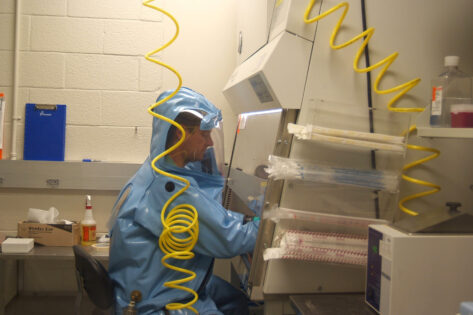
Beyond the safe zone, one of the scientists working inside that system was Daria Shipilova. The 28-year-old researcher was last at the institute on September 25, according to colleagues. Four days later, she was admitted to Shelekhov District Hospital with severe pneumonia.
“Her relatives say the medical staff kept treating her symptoms as severe COVID until the very end,” said Miroslava, a former colleague of Shipilova. “She was put on a ventilator, and antibiotics were administered too late.”
Shipilova died October 2. Restrictions at Shelekhov District Hospital had already been reported the previous evening, before her condition became publicly known. Regional authorities confirmed the quarantine the following day, while restrictions spread to other medical facilities in Irkutsk and nearby Shelekhov. Miroslava said all 114 patients in the inpatient facility were confined inside.
Reports of restrictions at Shelekhov District Hospital appeared on the evening of October 1, before Shipilova’s condition became publicly known. Regional authorities confirmed the quarantine the following day, while restrictions spread to other medical facilities in Irkutsk and nearby Shelekhov.
The response soon moved beyond Siberia. The U.S. Embassy in Moscow issued a health alert October 6, warning Americans about reports of suspected pneumonic plague and quarantine measures in Irkutsk. The embassy told Americans in the affected area to avoid facilities under quarantine, follow local health guidance, and seek immediate medical attention if they developed fever or respiratory symptoms.
The alert reiterated the longstanding U.S. warning that American citizens should leave Russia, noting that the government’s ability to assist them is limited, particularly outside Moscow. Washington, meanwhile, began pressing Moscow directly for information about what had happened inside the anti-plague institute.
The State Department sent the Russian government a formal diplomatic démarche requesting clarification, according to reports citing a source familiar with the matter. President Donald Trump said he planned to discuss the incident with Russian President Vladimir Putin and offered U.S. assistance.
Moscow pushed back. Kremlin spokesman Dmitry Peskov said Russia had provided the World Health Organization with information under established procedures and criticized reports suggesting otherwise. Russian health authorities maintain that no plague cases have been detected among Shipilova’s contacts.
For scientists familiar with the institute’s controls, however, the circumstances surrounding Shipilova’s illness remain difficult to explain.
“I don’t know what would have to happen for infection to be possible at all,” one former classmate said. “A tiny crack in a glove and a breach of the rules, bringing a hand close to the face? I don’t know. It seems unlikely.”
Alibek, the former Soviet biological-weapons official who spent years inside the system, raised his own concerns about Irkutsk.
“It’s highly suspicious,” he said in an interview published on Internewscast after Shipilova’s death. Alibek said the lack of information surrounding the case was familiar. If Shipilova’s death ultimately proved connected to a laboratory accident, he said, he did not expect Russian authorities to disclose readily what had happened.
One development would particularly concern him.
“If amongst people who are quarantining, you’ll see more people dying, it can be antibiotic resistant.”
Inside the institute, the immediate consequences are less theoretical. Workers remained confined after Shipilova’s death, sleeping wherever they could while relatives brought food to the checkpoint.
“There are no beds, of course,” Roman said. “They allowed food parcels from relatives through the checkpoint.”
Officials in Moscow did not immediately respond to a request for comment.
The anti-plague network survived the Soviet Union and continues its work today, watching vast stretches of territory for pathogens its scientists have hunted for generations. Now one of its own institutes is under watch.
Stephen Caldwell reports on intelligence, covert operations, and security threats.