Soldier of Fortune Magazine The Journal of Professional Adventurers


The U.S. Army wanted a small reconnaissance vehicle. The troops overloaded it, armed it, and drove it into battle.
by Robert Fallon
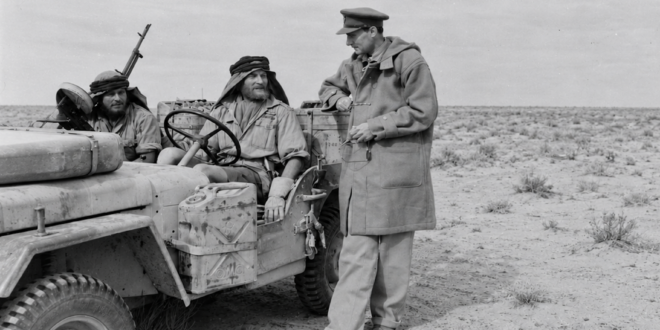
Eighteen Jeeps rolled across the Egyptian desert without headlights on the night of July 26, 1942. The British and Free French crews carried extra fuel, water and ammunition, with Vickers K machine guns mounted on the vehicles. Their target was a German-held airfield at Sidi Haneish, far behind Axis lines.
Runway lights suddenly appeared. They had been switched on for a German bomber coming in to land. The SAS commander David Stirling fired a green signal flare, and the Jeeps drove onto the field. The raiders fired into the parked aircraft, destroying or damaging 37 Luftwaffe planes before racing back into the desert. The raid showed what soldiers could make of a vehicle built for a much smaller mission.
A Vehicle Soldiers Could Use
Two years earlier, the U.S. Army sought to close the gap between motorcycles and command cars. Motorcycles carried little equipment and struggled in mud, while command cars were too heavy for close reconnaissance.
The Army wanted a low, four-wheel-drive vehicle that could cross rough ground and carry several men, plus a radio or a light machine gun. It needed a folding windshield, enough power to pull a load and an engine that troops could keep running in the field. It also had to be light enough to move aboard ships and aircraft.
READ MORE Guns & Gear History: The Weapons, Legends, and Gear of WWI
American Bantam built the first working prototype in 49 days and drove it from Butler, Pennsylvania, to the Army testing grounds at Camp Holabird, Maryland. Army drivers tried to break it on rough courses, steep grades, and punishing test runs.
Willys-Overland and Ford soon produced their own versions, and the Army combined ideas from the competing vehicles into a standardized design. Willys and Ford built most of the Jeeps that went to war. The factory story ended there for the men waiting on the other side of the ocean.
“It Goes Everywhere”
The first troops to receive Jeeps quickly discovered that the little vehicle could take punishment. It squeezed through narrow tracks, crossed ground that stopped ordinary cars, and carried far more than its quarter-ton rating suggested. Soldiers piled on ammunition, fuel cans, radios, tools, food and wounded men.
War correspondent Ernie Pyle saw how they treated it.
“Good Lord, I don’t think we could continue the war without the jeep,” he wrote. “It does everything. It goes everywhere. It’s as faithful as a dog, as strong as a mule, and as agile as a goat.”
The Jeep was cold in winter, dusty in summer and miserable in the rain. Its short wheelbase produced a punishing ride, and a careless driver could cause it to flip over. With no armor and an open body, it offered almost no protection from gunfire.
Troops used it anyway because it could get close to the fight. A Jeep could deliver a radio team, pull a light gun or bring ammunition forward when a larger truck could not make the trip. It could return carrying wounded men strapped to litter racks.
Mechanics and crews began modifying their Jeeps almost as soon as they received them. Communications units installed radios and cable reels. Weapons teams mounted machine guns, while medics fitted racks that turned the vehicle into a compact battlefield ambulance.
Airborne forces loaded Jeeps into gliders and sent them into Europe with trailers, guns and radio equipment. Amphibious units packed them aboard landing craft for assaults in the Mediterranean and Pacific. The SAS took the same idea further in North Africa. Crews stripped away unnecessary weight, loaded the vehicles with fuel and ammunition, and mounted combinations of Vickers K machine guns. The result was a light, heavily armed raider that could cross open desert, strike an airfield and escape before heavier vehicles could catch it.
Peep or Jeep?
Even the name had to survive the troops. The Army officially called it a truck, quarter-ton, 4×4, command reconnaissance. Soldiers called it the Bantam, Pygmy, Quad, Blitz Buggy, Peep and Jeep.
“Peep” made sense for a small vehicle that carried scouts forward for a look at enemy positions. Some armored units called the quarter-ton vehicle a Peep and used Jeep for a larger command car. Other troops called the smaller vehicle a Jeep from the beginning.
Army photographers used both names in 1942. A caption from Fort Story, Virginia, identified the quarter-ton vehicle as a “peep” and added, “not a jeep this time.” Photographs taken at Hickam Field two months later also called a Ford GPW a Peep.
Jeep eventually won. Willys test driver Irving “Red” Hausmann helped spread the name after driving one up the steps of the U.S. Capitol in February 1941.
By the end of World War II, American factories had produced nearly 650,000 conventional Jeeps, with many going to Allied forces under the Lend-Lease Program. They appeared in action around the world, including the SAS raid on the enemy airfield at Sidi Haneish.
The Army ordered a scout car, but the men in the field gave it every job they could fit onto four wheels.
Robert Fallon researches military history and combat operations.