Soldier of Fortune Magazine The Journal of Professional Adventurers


by Gatimu Juma
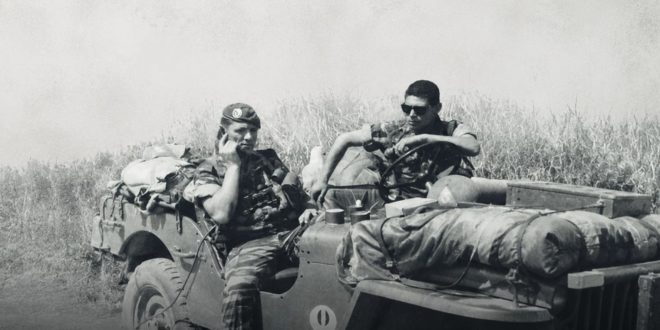
With civilians trapped and time running out, French Foreign Legion and Belgian paratroopers jumped into Zaire in 1978. The French segment was known as operation Bonite.
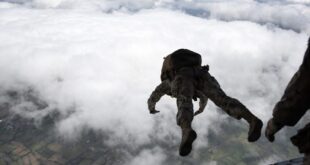
CAPE TOWN BUREAU – The doors opened in the skies over Zaire, and the Legionnaires stepped into empty air. Below them was Kolwezi, a mining city turned rebel stronghold, where desperate hostages were trapped and time was running out.
The men descending under parachutes belonged to the airborne arm of the French Foreign Legion. They were the 2e Régiment Étranger de Parachutistes, or 2e REP. They came from different countries, spoke different languages, and carried different histories before the Legion gave them a new identity under one banner. Now that banner was heading into one of the most dangerous missions of the Legion’s modern era.
Kolwezi sat in the mineral belt of southern Zaire, a region whose copper and cobalt reserves made it strategically important during the Cold War. In May 1978, fighters from the Front for the National Liberation of the Congo crossed from Angola across neutral Zambia and into Shaba Province, where they captured the city.
READ MORE: Inside the Grey’s Scouts Mounted Infantry
They rounded up around 3,000 Europeans and held them hostage. Reports emerged that the rebels had begun to execute the hostages. Rebels then fled the region in stolen vehicles, leaving behind a concentrated force of some 500 fighters. An international coalition including Belgium, France, Morocco and the United States arranged to intervene. The immediate rescue mission went to the Foreign Legion’s 2e REP, based in Corsica.
The commander was Colonel Philippe Erulin, an experienced combat leader. He and his team faced a stark situation. Every hour spent waiting gave the rebels more time with the hostages, and a slow advance toward Kolwezi risked arriving after the killing was finished.
Erulin and his team planned a direct airborne assault. Under Operation Bonite, or Leopard, hundreds of Legionnaires would fly thousands of miles and jump into the city itself with only limited preparation. They carried the weapons and equipment of late-1970s French airborne troops. They prepared for the kind of mission the Legion had performed throughout its history; deploy quickly, enter uncertain conditions, and finish the job far from home.
Details of the planned operation were beginning to leak, raising fears that the element of surprise would disappear if the Legion waited. On May 17, the men of 2e REP left Corsica aboard civilian DC-8 aircraft and flew toward Kinshasa, where the final preparations were rushed into place.
Heavy equipment arrived separately, intelligence briefings were conducted, and Legionnaires spent the night before the operation learning to use American parachutes. Hours later, they were loading onto aircraft again for the flight across Zaire toward Kolwezi.
The first wave of roughly 450 Legionnaires jumped into the city on May 19. They exited the aircraft at low altitude over the old hippodrome and immediately entered the fight. Many of the men who landed at Kolwezi were young Legionnaires who had never experienced a battle on this scale.
Erulin later described how quickly they adapted once the shooting began.
“As soon as the first shot was fired, all acted like veterans,” he said.
Rebel fire reached the drop zone, men were wounded during the landing. One Legionnaire became separated from his unit and was killed before he could rejoin the others.
Scattered groups of Legionnaires formed up and pushed into the streets. The battle became a series of fast, violent encounters as they moved through neighborhoods and industrial areas searching for survivors. Behind doors and inside buildings were civilians who had spent days hiding, but the Legionnaires also had to assume that every corner could hold armed rebels waiting to fire.
French marksmen went to work against rebel fighters threatening the advance, while assault groups cleared sections of the city. The FNLC launched a counterattack using captured Panhard armored cars, pushing against the Legionnaires now inside the city. The French met the attack with rockets and small arms, destroying the lead vehicle at close range and forcing the remaining armor to withdraw.
By evening, the Legion controlled much of Kolwezi, but the fight was not over. During the night, rebel fighters tried to slip back into the city, only to encounter Legion ambushes waiting for them. The paratroopers who had jumped that afternoon spent the night holding the ground they had taken.
The next morning, another wave of Legionnaires dropped east of the city, hitting rebel positions from another direction. As they pushed through the P2 quarter, they found one of the worst massacre sites uncovered during the operation, evidence of the killings that had taken place before the rescue force arrived.
Belgian paratroopers entered the operation to evacuate civilians, while 2e REP continued securing Kolwezi. The Legion pushed into remaining rebel-held areas, including the Metalkat industrial complex. During the fight for Metalkat, Sergent-Chef Daniel was killed, one of five Legionnaires from 2e REP who did not return from the operation.
Within days, thousands of civilians were evacuated. Other Legionnaires were wounded, and Kolwezi had entered Foreign Legion history not as a symbol or a slogan, but as a battle fought street by street after men stepped from aircraft into a city at war.
Kolwezi became one of the defining modern battles of the Legion because it represented the kind of operation for which the force was built: rapid deployment, harsh conditions, political complexity, and uncertain odds. The men who jumped came from many nations and many backgrounds, but on the ground at Kolwezi they fought as one regiment.
Gatimu Juma is based out of Soldier of Fortune’s Cape Town Bureau.