Soldier of Fortune Magazine The Journal of Professional Adventurers


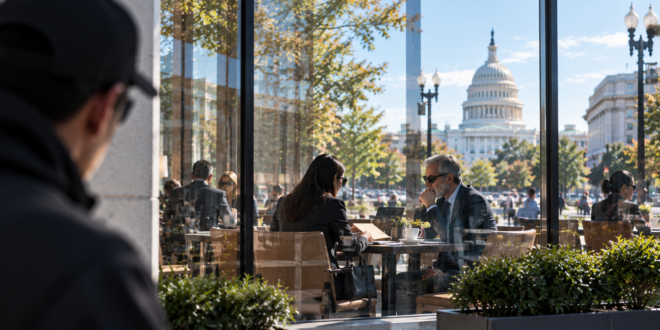
As Xi Jinping heads to Washington, federal cases show the workings of Chinese intelligence operations in the United States.
by Stephen Caldwell
A woman flew into Detroit Metro Airport from Shanghai on Sept. 8, one of many trips she made between China and the United States. When customs officers questioned her, she identified herself as Di Jin. She said she planned to spend 11 days with an 81-year-old friend in Washington. A few questions later, officers wanted to know more. They sent Jin to secondary inspection and searched her belongings.
Jin, 41, is now in federal detention in Michigan. She was charged Sept. 11 with acting inside the United States under the direction of a foreign government without notifying the Attorney General.
Jin’s arrest came less than three weeks before Chinese leader Xi Jinping’s state visit to Washington, D.C., where he is expected to meet with President Donald Trump. The visit will put the U.S.-China relationship on full diplomatic display, with trade, security and other issues in the foreground. The visit also occurs against a backdrop of investigations into Chinese intelligence activity inside the United States.
READ MORE: China Says Spy Balloon is Really a Weather Gauge Blown Off Course
Earlier this month, FBI Director Kash Patel told the Senate Judiciary Committee that the cases have seen a sharp rise in the past year and a half. The Bureau neutralized 60 Beijing-linked agents over the past 18 months, Patel said.
The Collectors
China keeps much of its intelligence apparatus under one umbrella. The Ministry of State Security handles foreign intelligence, counterintelligence and political security, while also using people outside the professional intelligence service to collect information and approach targets.
According to the FBI affidavit, intelligence officials in Tianjin first approached Jin in 2012 because she had connections to aviation giant Airbus. Jin told investigators that before she embarked on trips to the U.S. in 2024, 2025 and 2026, MSS officers told her to approach certain contacts in America. They also gave her a cover story. If anyone asked, she was to say she worked for a Beijing think tank.
Jin’s case is among several in Michigan since 2022. Two weeks before she was arrested, federal prosecutors charged a University of Waterloo student with taking pictures of specific aircraft for a contact he believed worked for Chinese intelligence. Other Michigan cases have involved military installations and biological materials.
Those cases form part of a much broader counterintelligence fight involving Chinese intelligence operations across the United States.
“The counterintelligence and economic espionage efforts emanating from the government of China and the Chinese Communist Party are a grave threat to the economic well-being and democratic values of the United States,” the Bureau writes in a statement.
“Confronting this threat is the FBI’s top counterintelligence priority,” the Bureau writes.
The cases don’t depend on a summit to happen. They’re the visible edge of a counterintelligence relationship that’s been running hot for years, arrest by arrest, regardless of who’s shaking hands in Washington that week.
Stephen Caldwell researches covert operations and intelligence tradecraft.