Soldier of Fortune Magazine The Journal of Professional Adventurers


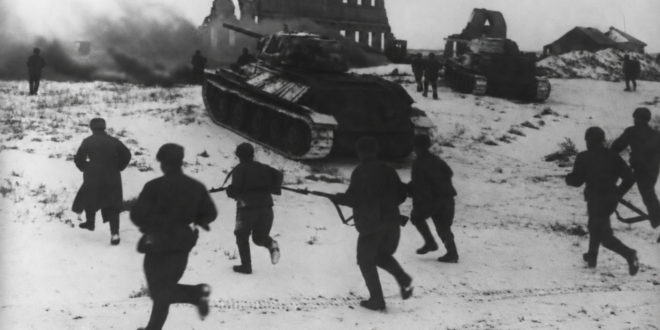
Germany’s Sixth Army was still fighting for factories in Stalingrad when Soviet forces broke through Romanian lines north and south of the city. Five days later, Soviet tank columns met west of Stalingrad, trapping the German army.
by Stephen Caldwell
Romanian troops along the Don River northwest of Stalingrad had too much ground to cover and too few guns that could stop a tank. They had been fighting alongside Germany against the Soviets for nearly 17 months. On the morning of November 19, 1942, Soviet artillery opened fire on their positions northwest of Stalingrad. When the bombardment lifted, Soviet infantry and armor attacked. By nightfall, Soviet tanks had breached the Romanian line and were advancing across open country.
The attack on the Don was the opening blow of Operation Uranus, a Soviet counteroffensive that turned the battle for Stalingrad into a fight for the survival of the German Sixth Army.
Germany’s summer offensive had carried its forces deep into Soviet territory, toward the Volga River and the oil fields of the Caucasus. Now the Red Army had a chance to cut off an entire German army and seize the initiative on the Eastern Front. Within five days, it trapped an estimated 250,000 to 300,000 Axis troops at Stalingrad.
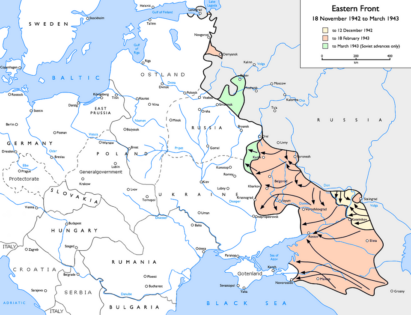
The Sixth Army had taken much of Stalingrad, but Soviet defenders still held pockets along the Volga. The Germans kept committing men and guns to the fight for factories and city blocks. Outside the city, two Romanian armies had to defend long stretches of front with far fewer men and guns.
The plan went around the city
Soviet generals Georgy Zhukov and Aleksandr Vasilevsky helped plan a two-pronged attack. One Soviet force would break through the Romanian Third Army northwest of the city. A second would attack through the Romanian Fourth Army to the south. Once through, the two forces would drive toward each other and meet west of Stalingrad, cutting the roads that supplied the Sixth Army and gave it a way out.
Five days to close the ring
For weeks before the first barrage, the Red Army moved troops, tanks, guns, and ammunition into position while concealing where it meant to strike. By mid-October the Germans had reports of Soviet troops massing opposite the Romanians, but air reconnaissance could not confirm them.
Along the Romanian lines, Sgt. Manole Zamfir heard Soviet soldiers call out in Romanian, “Brothers, why are you killing us?”
The day after the breakthrough along the Don, Soviet troops attacked south of Stalingrad. They broke through the Romanian Fourth Army’s line and turned northwest. Meanwhile, the tank columns from the north were driving southeast toward a bridge across the Don at Kalach.
Soviet troops seized the crossing at Kalach on November 22. The following day, the northern and southern columns linked up near Sovetsky, southeast of Kalach, and closed the ring. The German Sixth Army and elements of the Fourth Panzer Army were among the forces trapped inside. The roads they had relied on for supplies and retreat were now in Soviet hands.
The road out stayed closed
Hitler ordered the Sixth Army to hold its ground. The German air force tried to supply the trapped troops by air, but it could not deliver enough food, fuel, and ammunition. In December, a relief force under Field Marshal Erich von Manstein attacked from the southwest in an effort to reopen a route to Stalingrad. The operation, code-named Winter Storm, stalled roughly 30 miles from the encircled troops.
The Red Army began its final offensive against the encircled troops in January. The last German troops there surrendered on February 2, 1943. The city was still contested when the Soviet columns met in November. The ground that decided the fate of the Sixth Army lay miles from the streets it had fought to take.
Stephen Caldwell writes about military history, covert operations, and intelligence tradecraft for Soldier of Fortune.